





From the magazine
Bhagwan Mahavir Wildlife Sanctuary – All You Need To Know
Along the north from Panaji on the road to Belgaum, is a sanctuary that covers 240 sq-km. Thick wooded area clad slopes of the Western Ghats that is rich in flora and fauna and a paradise for bird watchers. The Bhagwan Mahavir Wildlife Sanctuary is placed in the Goan town of Mollem. The sanctuary is located on the eastern border of Goa, with Karnataka 53 kilometers away from Panaji and 54 kilometers away from Margao. It is easily accessible by both road and rail. Unless you stay for at least a couple of days, it is unlikely that you will catch a glimpse of many of the animals that are sheltered in the sanctuary, including Gaur, Sambar, Leopards, Spotted Deer, Slender Lories, Jungle Cats, Malayan Giant Squirrels, Pythons and Cobras.
How to Go to Bhagwan Mahavir Wildlife Sanctuary
This sanctuary is located on the eastern border of the state of Goa, near the village of Mollem. It is about 53km from Margao and 54km from Panaji. It also encompasses the 107 sq. Km area of the Mollem National Park.
When to Go to Bhagwan Mahavir Wildlife Sanctuary
This sanctuary is a popular tourist attraction throughout the year. Although most frequented during the tourist season from October to March, it is a great place to visit during the monsoons, when the fullest extent of nature’s bounty is visible with the waterfalls at their zenith and the trees clad in their monsoon garments of fresh green.
The sanctuary is open all days of the week from 8.00 am to 5.30 pm
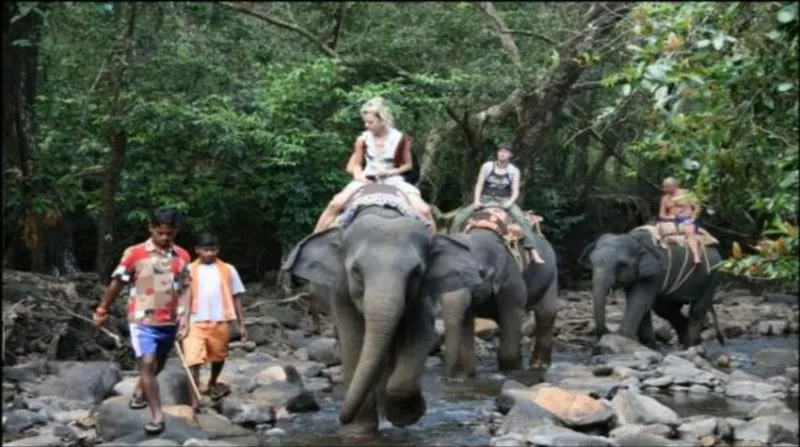
Image Source: tripadvisor.in
Admission and Tickets to Bhagwan Mahavir Wildlife Sanctuary
The price of admission is extremely reasonable. Adults are charged Rs.20 each, whilst children enter for Rs.10 each. Cameras are allowed into the sanctuary for Rs.30 for still cameras and Rs.150 for video cameras
History of Bhagwan Mahavir Wildlife Sanctuary
This sanctuary was formed to protect the vast biodiversity seen in the Western Ghat. Originally known as the Mollem Game Sanctuary, it was declared a wildlife sanctuary in 1969 and thence renamed the Bhagwan Mahavir Wildlife Sanctuary.
The core area of the sanctuary, encompassing about 107 sq. Km of land was declared a national park in 1978 and is known as the Mollem National Park.
Flora and Fauna
The area covered by the sanctuary is heavily forested and contains pristine vegetation known as West Coast tropical evergreen forests, West Coast semi-evergreen forests and moist deciduous forests. The evergreen forests are usually found at higher altitudes, on the upper slopes of the Ghats and along the banks of the perennial rivers that criss-cross the sanctuary.
The primary species of trees found here include Terminalia, Lagerstroemia (crepe myrtle), Xylia and Dalbergia (timber trees). The forest cover is so dense that the sunlight does not even reach the forest floor in many places. In addition to trees, the sanctuary is also home to 722 species of flowering plants and 128 species of plants that are endemic to the Western Ghats, India or the Indian Peninsula.
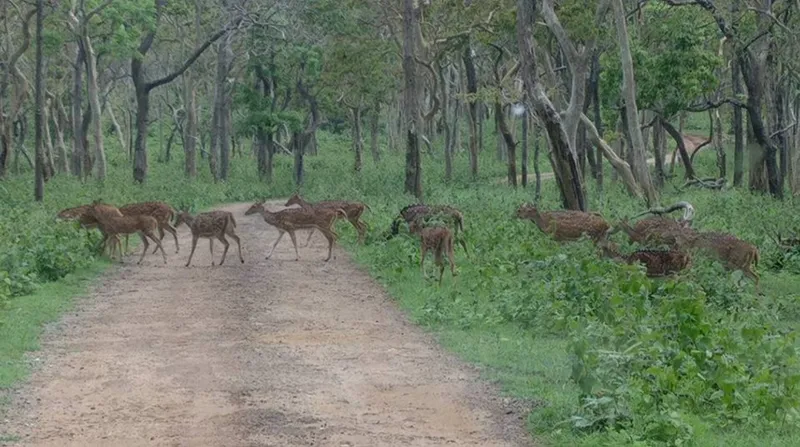
Besides plants, eager visitors can also hope to see a number of animals within the forests. The sanctuary is the natural habitat of several species of herbivorous animals including the Deer, sambar, spotted deer, hog, mouse deer and barking deer. The carnivores that make their home here are the tiger, leopard, panther, jungle cat and toddy cat.

Image Source: travelogyindia.com
In addition to these, the canny visitor can also hope to spot the lesser Indian civet, wild dog, hyena, sloth bear, jackal, bonnet macaque, slender loris, scaly anteater, giant squirrel, flying squirrel, flying fox and common otter.
The state bird of Goa, Ruby-throated Yellow Bulbul, is the most common of the 120 species of birds that have been spotted in this sanctuary. Ornithological enthusiasts can also keep their eyes peeled for the Golden Oriole, Emerald Dove, Common Grey Hornbill, Paradise Flycatcher, Great Pied Hornbill, Malabar Pied Hornbill, Malabar Trogan, Crested Serpent Eagle, Crested Honey Buzzard, White-rumped Spine Tail, Ashy Wood Swallow, Asian Palm Swift, Jungle Babbler, Olive-backed Pipit, Pompadour Pigeon, Jungle Owlet, White-bellied Woodpecker, Black-crested Bulbul, Forest Wagtail, Scarlet Minivet, Chestnut-bellied Nuthatch, Velvet-fronted Nuthatch and the Sulphur-bellied Warbler.
The butterflies that populate the park with their fleeting flashes of colour include blue mormon, common Jezebel, common Mormon, common mime, plum Judy, common wanderer, crimson rose, lime butterfly, plain tiger, southern birdwing and tailed jay. There are also endemic species that the enthusiastic Lepidopterist will notice like the Malabar tree nymph and the Tamil Yoeman.
A number of snakes are also found within the park. These include the bronze-back tree snake, cat snake, hump-nosed pit viper, Indian rock python, Malabar pit viper, rat snake, Russell’s viper, Indian cobra and common krait. The most famous reptilian inhabitant of the park, however, is undoubtedly the king cobra.
Image Source: tripnetra.com
Other Attractions
Apart from being home to this wide and varied array of plant and animal life, the Bhagwan Mahavir Sanctuary is also distinguished by a number of other popular attractions. These include:
- Dudhsagar waterfalls – This is the tallest waterfall in India and an extremely awe-inspiring natural wonder; especially during the monsoon season.
- Tambdi Falls – Although this waterfall is almost as high as the Dudhsagar falls, it does not attract as many visitors, due to the steep and rocky trail that one must take to approach the base of the waterfall. Hiking enthusiasts and rock-climbing fans will enjoy making this trek with one of the experienced guides that the park has to offer.
- Devil’s Canyon – This eerie canyon carved out of solid rock by the path of the river is notable not just for its natural peace and beauty but also for the myth and legend that surround it.
- Tambdi Surla Temple – This small but exquisite 12th century temple, dedicated to Lord Mahadev, is located in the northern region of the sanctuary.The temple is notable for its stone work and lotus carvings in the Ashokan style.
- Hiking and Trekking – Although one can pay to take private vehicles into the park a better way to experience nature is by hiking through it. There a number of hikes and treks conducted throughout this park. The guides are knowledgeable about the terrain that they cover as well the plant and animal life that one is likely to encounter during a hike. The trails are unmarked and so it is wiser to embark on these exploratory journeys with a guide.
- Eco-tourism Wing – For those anxious to learn more about the native flora and fauna the eco-tourism wing and Nature Interpretation Centre has an invaluable amount of data and collectibles that are open to the public.
Another facet of Goa’s varied bouquet of attractions, this National Park/Wildlife Sanctuary is undoubtedly a must-see for all those nature and animal lover tourists. Touring the park is also a great leisure activity during the monsoon season. Those who wish to, can find adequate accommodation available near the park and spend a part of their Goan holiday amidst these beautiful and majestic natural surroundings.