


From the magazine
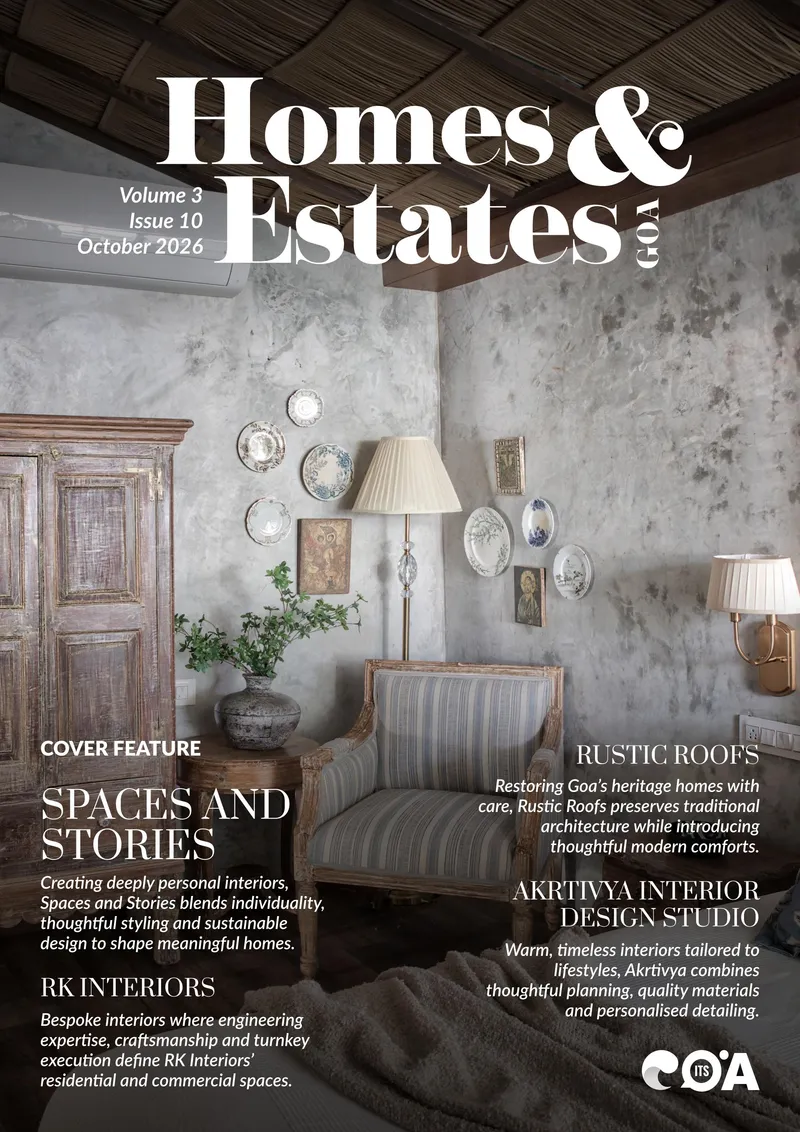
Rustic Roofs
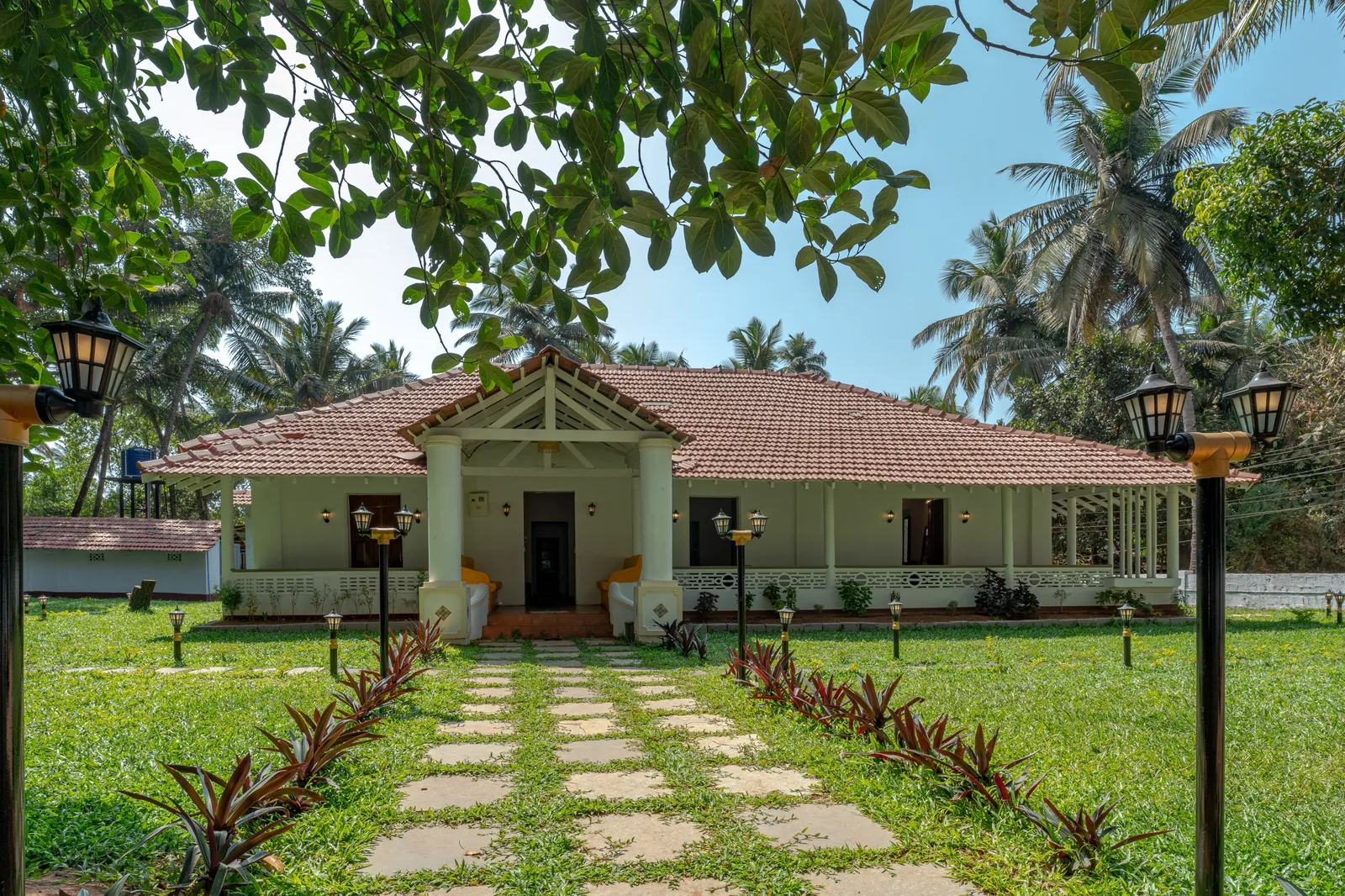
In Arossim, there is a lane that has remained remarkably unchanged for generations. The baker still passes through on his bicycle at dawn, neighbours continue to know one another by name, and at the end of the lane, behind an old boundary wall, stands a Portuguese-era mud house that has witnessed nearly 180 years of life.
This is Lilia, the first restored home by Rehan and Mark, founders of Rustic Roofs, a Goa-based company dedicated to restoring heritage homes across the state and giving them a new lease of life. The property represents their belief that historic homes can be brought back into use without erasing the qualities that make them distinctive.
The Beginning of Rustic Roofs
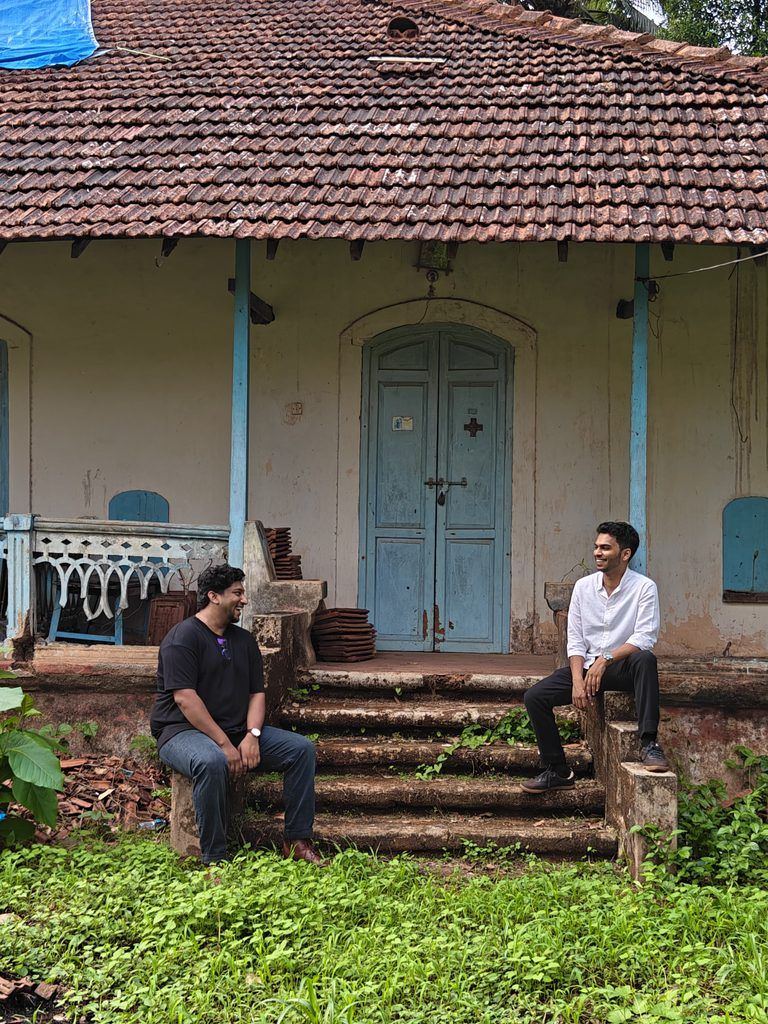
The idea behind Rustic Roofs began in 2023, when Rehan and Mark repeatedly encountered old Goan homes in varying states of disrepair. Mud walls were softening, roofs were exposed to the monsoon and rooms that had once accommodated entire families stood empty.
Rather than accepting their deterioration as inevitable, the founders began asking whether these homes could be restored while retaining what made them worth saving. Lilia became the first opportunity to explore that approach.
When they discovered the Arossim property, it had already experienced years of neglect. The family had moved away and, without anyone taking responsibility for its upkeep, the roof and walls had gradually collapsed. What remained was an old home with a long history but little of the care it once received. The restoration set out to change that without turning Lilia into something it was never meant to be.
Preserving the Architecture
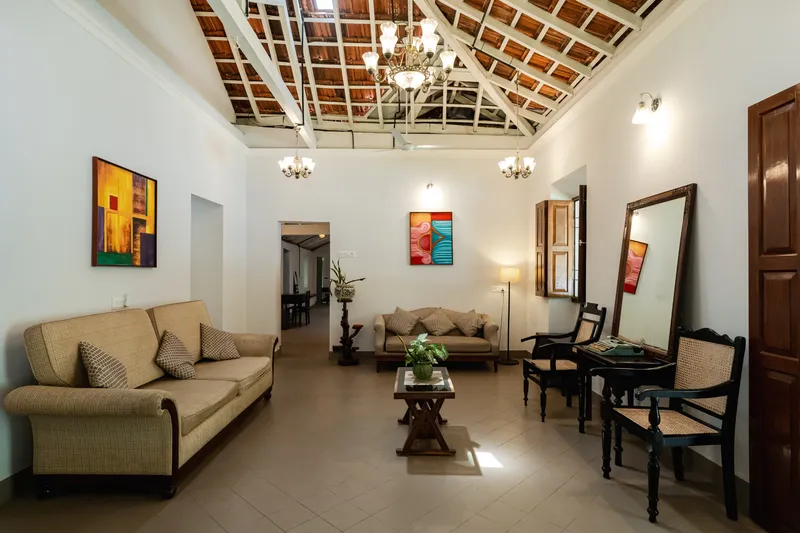
One of the defining principles behind Lilia’s restoration was to ensure that the house would still feel like itself once the work was complete. The mud walls were rebuilt from scratch, while Mangalore tiles were sourced one by one. The restoration retained the original design intelligence of the home, including its thick mud walls and windows positioned to catch the breeze.
The altar room remains part of the house, while the décor has been rooted in the character of the property rather than imposed as a separate design concept. These elements allow the home’s history to remain visible, even as the property takes on a new purpose.
The approach reflects an understanding that restoration is not simply about repairing an old structure. It is about identifying the elements that give a home its identity and ensuring that they continue to shape the space.
Old Character, Modern Comfort
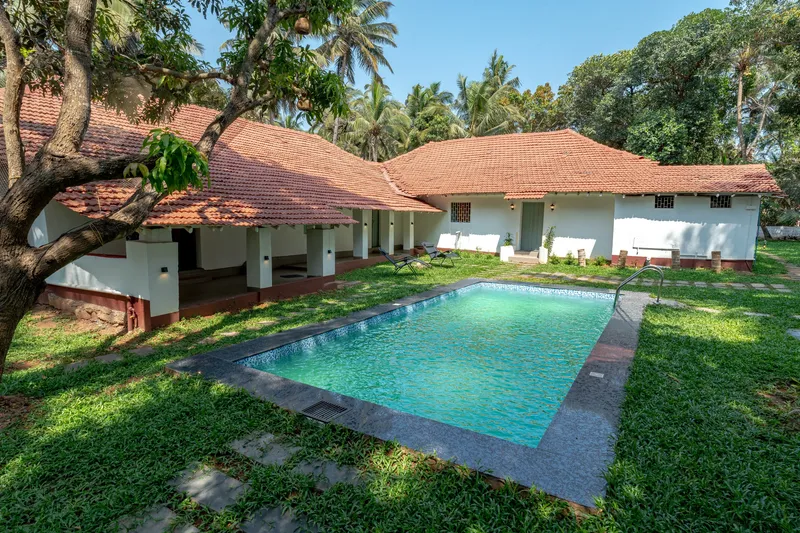
Lilia’s restoration balances its traditional architecture with the practical requirements of contemporary living. The property has five bedrooms, each with its own bathroom, alongside a living room, dining room and altar room that connect naturally. Outdoors, the house opens into a garden with a gazebo, barbecue area and private pool beneath a coconut canopy.
The founders retained the mud walls, Mangalore tiles, layout and natural breeze that give the home its character, while introducing facilities that make an extended stay comfortable. A private bathroom for every bedroom, a swimming pool and barbecue area provide modern convenience without overwhelming the original structure.
An in-house chef can also be arranged, with Goan food, seafood and thalis available on request. Yoga sessions can take place within the property, while Arossim Beach is only a five-minute walk from the front gate.
For a home that is approximately 180 years old, ensuring that everyday facilities function smoothly was also an important part of the restoration. Guests have noted that essentials such as electricity and basic amenities work seamlessly, allowing the historic character of the house to coexist with the expectations of a modern stay.
A House Designed to Be Lived In
Lilia is available for exclusive use, giving one group the entire house and garden without shared spaces or other guests. The spacious bedrooms, lawn and pool make the property particularly suited to families and larger groups who want to spend time together within one home.
The lawn provides room for games and smaller celebrations, while the pool adds another space for families to gather. The property can accommodate up to 150 guests for gatherings and celebrations. Its use since restoration has reflected that flexibility. Lilia has hosted wedding celebrations, family reunions bringing children and elders together, a football-themed children’s birthday party and a group painting session organised around one long table.
For the founders, hosting these occasions is also personal. They remain involved in celebrations at the property, sourcing local flowers and helping guests connect with the appropriate priest or musician. This hands-on approach allows the house to function not simply as an event setting, but as a place where personal occasions can unfold within an authentic Goan home.
Life Around the House
The experience at Lilia is closely connected to its setting in Arossim. A typical day begins without hurry, perhaps with the local poder arriving with warm bread along the same route he has cycled for years.
From there, guests might practise yoga, walk to the beach or explore the village through a heritage walk. Afternoons can be spent by the pool or in the garden, while the Sunday fish market is approximately ten minutes away by car.
As evening approaches, the focus returns to the house. A barbecue, a long dinner and sunset from the balcão create an experience shaped as much by the property as by the surrounding village. The founders also share their knowledge of the area, recommending beach shacks and walking routes that allow guests to experience Arossim beyond the usual tourist circuit.
Restoring Homes With Stories
For Rustic Roofs, Lilia is the beginning of a larger endeavour. Rehan and Mark hope to continue bringing historic properties across Goa back to life, particularly homes with stories that deserve to be preserved and shared. Their approach is ultimately centred on giving these structures a future rather than simply preserving them as reminders of the past. Lilia’s mud walls, tiled roof, traditional layout and altar room remain part of its identity, while the additions required for contemporary living allow the home to function once again.
Their experience with managing villas has also led to the creation of Whera, an app currently in pre-launch. Developed in response to the fragmented nature of hosting, the platform brings together elements such as offline bookings, guest communication and management across multiple platforms. Built from the founders’ own experience, Whera is intended to simplify the process for hosts while creating a more straightforward stay for guests. Lilia is one of the properties hosted on the platform.
At the heart of Lilia is an idea that extends beyond restoration itself: a home becomes meaningful through the life it holds. After years of standing neglected, this 180-year-old Arossim house once again has people gathering around its long tables, children playing in its garden, meals being shared and stories being passed on. Its architecture has been restored, but more importantly, the house has been given the opportunity to be lived in again.