
For more than 150 years, this ancestral Indo-Portuguese villa in Pilerne has remained closely tied to the D’Souza family. Built between 1860 and 1901 by Sylvester D’Souza’s great-great-grandfather, the home has passed through four generations and continues to retain the character, craftsmanship and memories of the family that built it. Today, Sylvester and his wife, Sanaa Nalwalla, lovingly manage the property, which has been opened to guests as a holiday home.
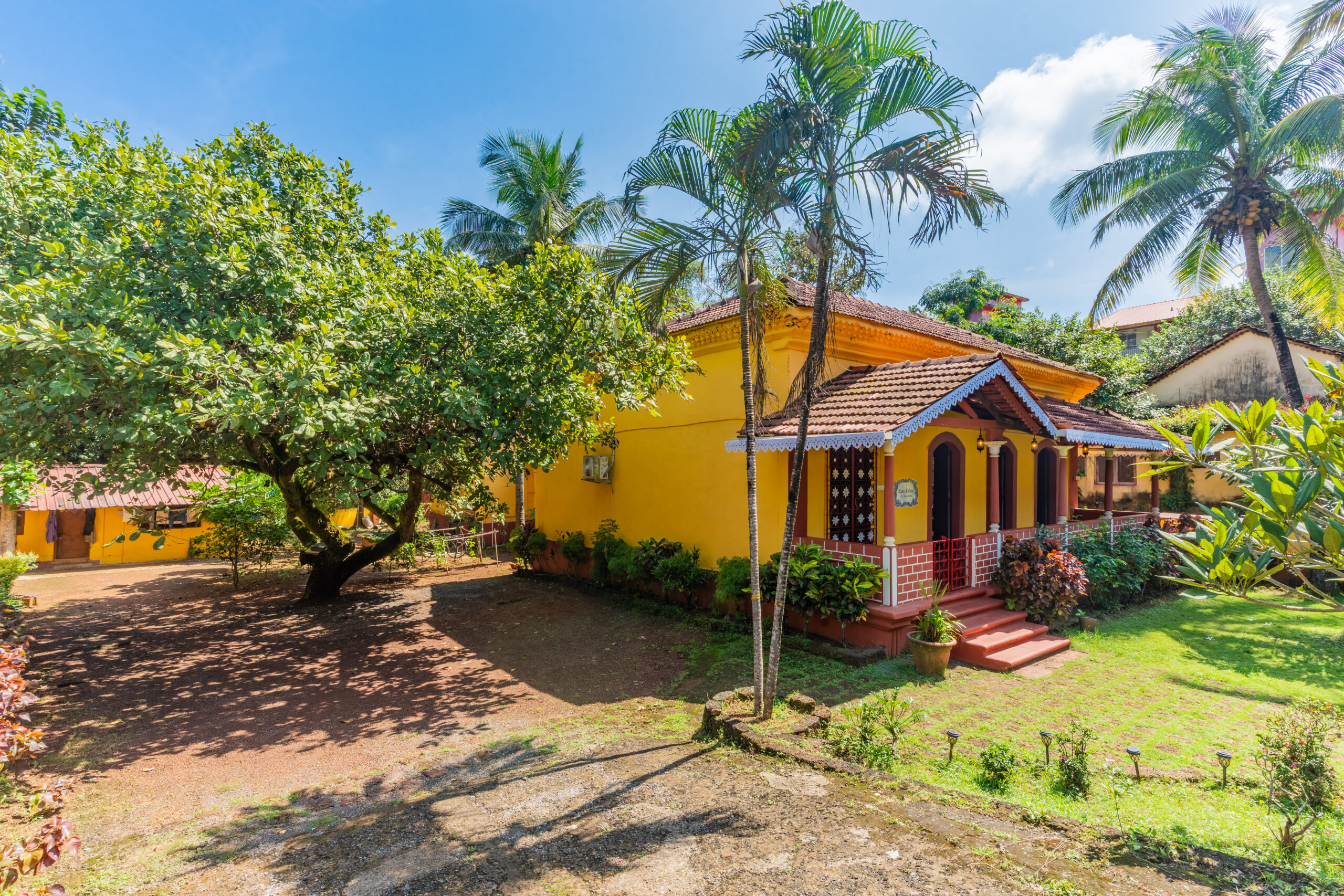
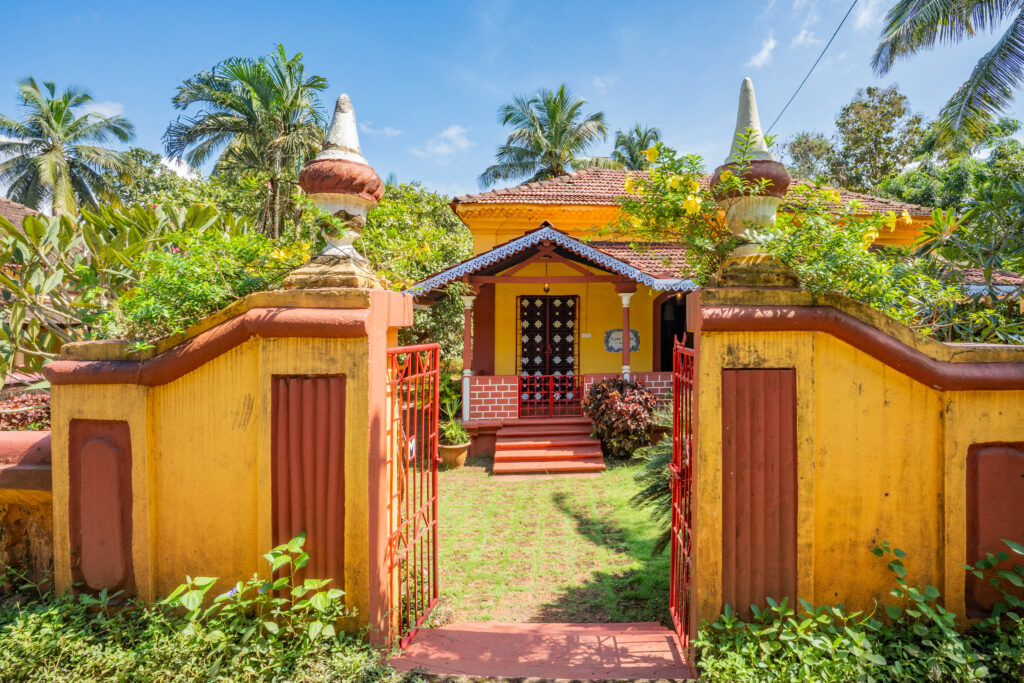
With four bedrooms, a generous living room, a long corridor, a fully equipped kitchen, a landscaped lawn and ample parking, the villa offers the comforts of a contemporary stay without losing its historic identity. Behind its bright yellow façade lies a home shaped by generations of family life, years of restoration and a conscious effort to preserve the details that make traditional Goan homes distinctive.
A House Rooted in History
The family’s story reaches back to Portugal, where their ancestors originated from the riverland of Souza. Like many families connected to Goa’s Indo-Portuguese heritage, they eventually settled in India and established their lives here. When the land for the villa was acquired, its natural topography and geology influenced the construction. Stone was sourced directly from the property’s own quarry, making the building process more practical while giving the structure a strong connection to its surroundings.
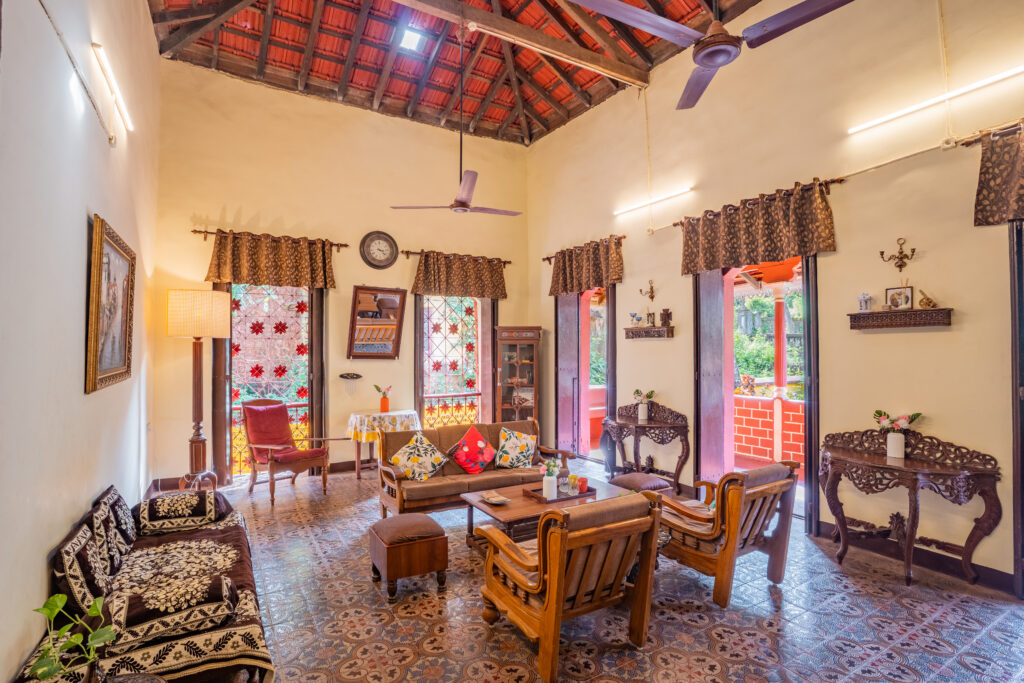
The original builder also spent years working as a customs officer in Zanzibar. During that time, he sourced tiles and had them shipped to Goa. Some of these remain in the house to this day, particularly in the living room and two bedrooms, offering a tangible link to the villa’s earliest years. The house has endured changing generations, seasons and circumstances, retaining elements of its original construction along the way.
For the family, preserving the property was always important. Rather than allowing the ancestral home to fall into disrepair or remain closed for most of the year, they chose to give it a new purpose while keeping its history intact.
From Summer Home to Holiday Retreat
The villa was once a much simpler family summer home. Although Sylvester and his family grew up in Mumbai and later lived in Pune, Goa remained an important part of their childhood. Summer holidays meant spending nearly two months at the house, where life was comfortable but basic, without air conditioning or many of the conveniences expected today.
Sylvester developed an interest in interiors from a young age and gradually began imagining how the house could be improved without taking away its character. Around 15 years ago, the family undertook significant restoration, raising ceilings and walls, bringing in and treating long wooden logs, and working extensively on the gardens and surrounding landscape.
Over the past decade, Sylvester has taken an increasingly hands-on role in the transformation. Instead of relying entirely on a contractor, he remains personally involved in sourcing materials, supervising work and making decisions on the property. The process has often been demanding, particularly while managing unreliable labour, material availability and timelines from a distance. Visits to Goa every few months are dedicated to overseeing the work, with video calls helping coordinate the remainder remotely.
Restoring the Past, Improving the Present
The villa’s latest renovation, undertaken over six months, introduced several upgrades while respecting the original structure. Two attached bathrooms were enlarged and retiled with Portuguese-inspired accent walls, while bedroom floors were renewed. Regular beds were transformed into poster beds, bringing a more traditional character to the rooms.
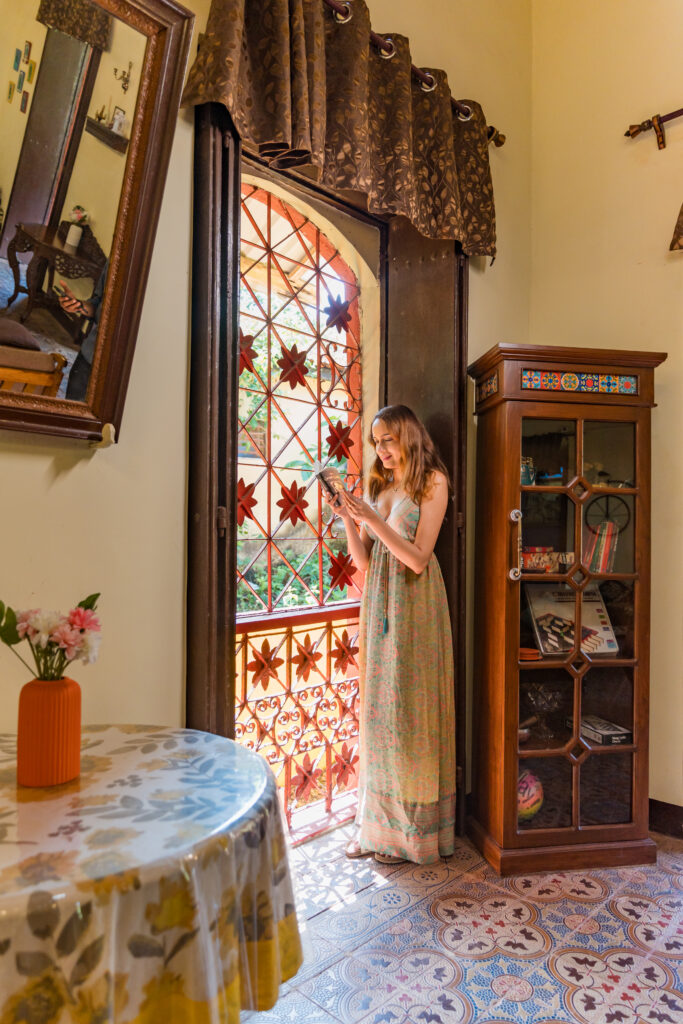
The backyard was redesigned, the caretaker’s residence was expanded and a comfortable sitting area was created near the windows. Cushions allow the space to double as a quiet reading nook, while new lamps and a carefully designed book and games cabinet add warmth to the living room.
Yet the renovation was never about making the property feel new. The intention was to make it more comfortable while allowing its age to remain visible. The result is a home where modern conveniences sit naturally alongside details that have survived for generations.
Details That Preserve Its Goan Soul
Some of the villa’s most memorable features are the ones the family deliberately chose not to change. The original tiles remain one of its strongest links to the past, while the traditional skirt curtains, once unfamiliar to Sanaa, have become a much-loved feature after seeing similar details in other Goan homes.
The doors offer another glimpse into the practical architecture of an earlier era. One retains an old locking mechanism involving a metal bar, while another, known as an ‘Adambo’, uses a wooden bar inserted into a cavity in the wall. Such robust systems were designed to offer protection from weather and unwanted intruders.
Elsewhere, everyday objects contribute to the home’s character. China plates decorate the kitchen, while the original cement-and-brick sink remains in place. A distinctive terracotta band runs from the floor upwards along the walls. Individually, these may appear like small details, but together they create the unmistakable atmosphere of an old Goan home.
A Comfortable Stay in a Quiet Village
Guests arrive to the villa’s cheerful yellow façade and a more than century-old cashew tree beneath which cars and bikes can be parked. The traditional balcao offers a natural place to sit with a book, enjoy a conversation or simply watch the day unfold.
Inside, high ceilings and generous seating make the living room particularly suited to families and groups. Four air-conditioned bedrooms can accommodate between eight and 12 guests, with each room also featuring a study table that can serve as a workstation for those combining travel with work. The long corridor connects the bedrooms, while the rooms themselves retain a warm, intimate character.
The bathrooms provide hot running water and fans, while the kitchen is equipped with a refrigerator, microwave, toaster, utensils and cutlery for guests who prefer to prepare their own meals. The property therefore combines the ease expected from a contemporary holiday rental with the atmosphere of a lived-in ancestral home.
The Pace of Pilerne
Located in Pilerne, close to Porvorim, the villa sits within a quiet residential lane surrounded by century-old homes. Its setting is central to the experience. There is little of the bustle associated with Goa’s busier tourist areas, allowing visitors to settle into a slower rhythm.
The peaceful surroundings also make for restful nights, while the woods behind the property become particularly enchanting after the first monsoon showers, when fireflies appear among the trees. At the same time, the location remains convenient, with the nearest beach around four kilometres away and Panjim, Mapusa, Baga and Calangute approximately six to seven kilometres from the villa.
Everyday Goan Experiences
The property encourages guests to experience Goa through its everyday rhythms rather than simply as a tourist destination. Local pavwalas pass through the area on bicycles and motorbikes in the mornings and evenings, carrying freshly baked breads such as poi, uddo and katrao pav. Guests can hail them from the road and pick up bread for breakfast or an evening meal.
Food is another part of the experience. Caretaker Meena, who has been associated with the property for more than 25 years, prepares home-style meals at an additional cost. She makes her own masalas and can prepare chicken, mutton and seafood thalis, along with breakfasts such as poha and upma. Her cooking adds another layer of familiarity to the stay.
Meena and her husband, Bhujang, have become an integral part of the villa. They look after guests from check-in to departure and are always available to assist with their needs. Bhujang, who has a particular love for plants, takes pride in tending to the gardens, which have become almost an extension of his care for the property.
A Home Shared with More Than Guests
The villa is also home to Gracie and Coco, two rescued dogs who have been part of the family for several years. Coco has claimed the balcao as his favourite spot and keeps watch over the property, while Gracie is known for her affectionate nature and constant wagging tail. Their presence is one of the reasons the villa welcomes pets, making it a space where dogs, cats and other companions are equally welcome.
Guests can spend their days reading from the collection of books, playing board games, cricket or football, or practising yoga on the lawn. During summer, cashew fruits can be picked from the old tree, while coconuts from the property are shared when harvested. These simple activities reflect the experience the family hopes to offer: less about a packed itinerary and more about enjoying the surroundings.
A Heritage Home with a Purpose
For Sylvester and Sanaa, the villa is not simply a commercial holiday property. It remains their ancestral home and, eventually, their intended retirement house. Opening it to guests is their way of allowing others to experience a part of Goa’s architectural and cultural heritage while ensuring the property continues to be cared for.
There is also a deeper purpose behind its operation. A significant portion of the booking proceeds is directed towards an NGO supporting orphans and children of sex workers, an organisation the family has supported since they began hosting. Each stay therefore contributes not only to the preservation of the home but also to a cause that is personally meaningful to the family.
The story of the villa is still unfolding. Plans for the future include a swimming pool, an additional bedroom, a side sit-out, a bar and gazebo behind the house, as well as further improvements to the kitchen and rear portion of the property. Through each addition, the family remains committed to protecting what came before while allowing the home to evolve.
After more than a century and a half, the villa continues to be what it has always been at heart: a family home. Its weathered details, restored spaces, familiar faces and quiet surroundings tell a story of generations, while its doors now allow visitors to experience a slower, more intimate side of Goa.