
In an age where speed often defines experience, Dharamkot Studio offers something radically different: slowness, tactility, and shared creative time. What began as a small pottery space in the mountains of Himachal has grown into a creative sanctuary that now lives between Dharamkot and Mandrem in Goa. At its heart, the studio was founded with a simple intention, to make clay accessible, grounding, and shared.
From the beginning, pottery was never treated as a mere craft or hobby. It became a medium for building a space where people could find quiet focus and discover their own rhythm through their hands. Over time, Dharamkot Studio evolved not only through the efforts of its founders, but through the presence of every traveler, artist, and beginner who walked through its doors, leaving behind a trace of their learning and experience.
From Mountains to Coast: Two Landscapes, One Philosophy
Although Dharamkot Studio exists in two distinct geographies, Dharamkot in Himachal Pradesh and Mandrem in Goa, the spirit remains unchanged. Both spaces are rooted in the same philosophy of slowing down, working with the hands, and learning within a shared environment. The difference lies primarily in the surrounding landscape and the pace it invites.
Dharamkot, where the studio first took shape, sits in the mountains. The quiet village atmosphere naturally encourages participants to pause and immerse themselves in longer courses and focused practice. Many arrive for extended study, drawn by the stillness and the opportunity to deepen their relationship with clay.
Mandrem, by contrast, brings this same approach into a coastal setting. Here, the studio breathes alongside the sea. Creativity blends with beach life, and the rhythm feels open and relaxed. Visitors often arrive while exploring Goa, discovering pottery as part of a slower routine within their travels. The result is a relaxed, open studio where clay, creativity, and coastal life meet seamlessly.
Why Goa, and Why Mandrem
The expansion into Goa emerged from a larger vision. Over time, the studio’s founders noticed that many in their community moved between landscapes in search of places that allowed them to reconnect with themselves. This observation shaped a broader intention: to create creative spaces rooted in nature, wherever they may be.
Mandrem stood out because of its quieter village charm, offering a contrast to busier parts of Goa. The location aligned with the studio’s ethos, an environment where clay, community, and nature could exist in dialogue. Rather than limiting the studio to one geography, the founders saw Mandrem as another chapter in building mindful spaces across varied landscapes, whether mountain or coastline.
A Studio Shaped by Climate and Community
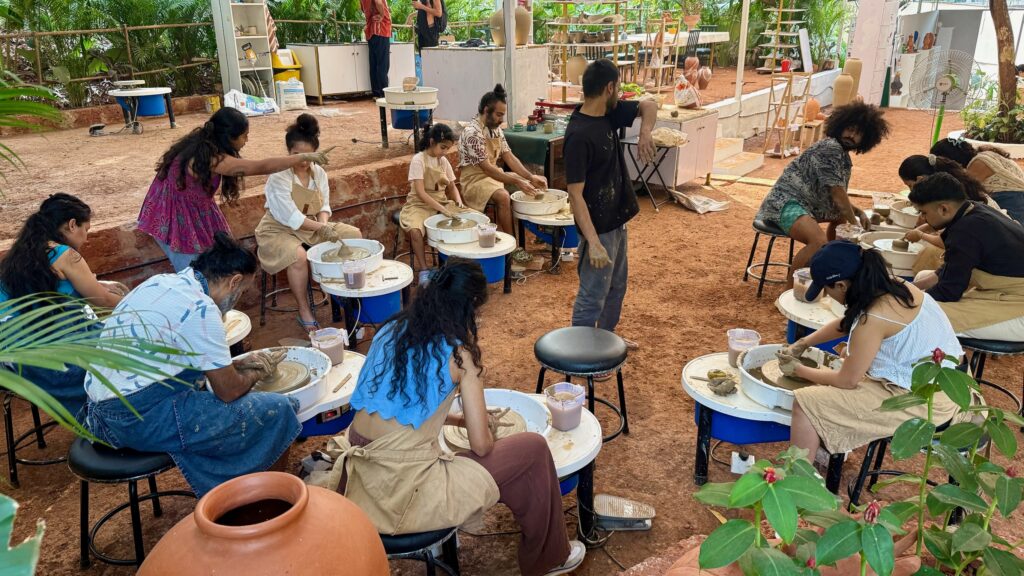
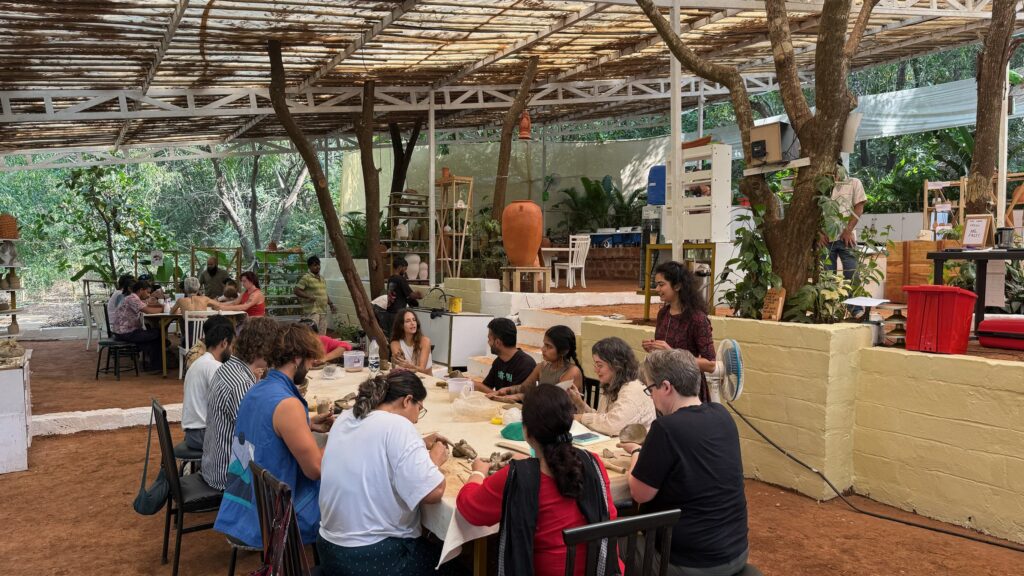
While the core philosophy remains consistent, the Goa studio has its own personality shaped by climate and atmosphere. Unlike the cozy, sheltered Dharamkot studios, where Studio 1 welcomes beginners and Studio 2 supports advanced and long-term practitioners, the Mandrem space feels open and breezy. The humidity influences the material itself; clay remains workable for longer, naturally encouraging a slower and more fluid pace.
The community in Goa is equally diverse. Long-stay travelers, visitors passing through, complete beginners, and practicing artists often share the same workspace. This mix enriches the environment, turning workshops into exchanges of perspectives as much as technique.
Learning the Language of Clay
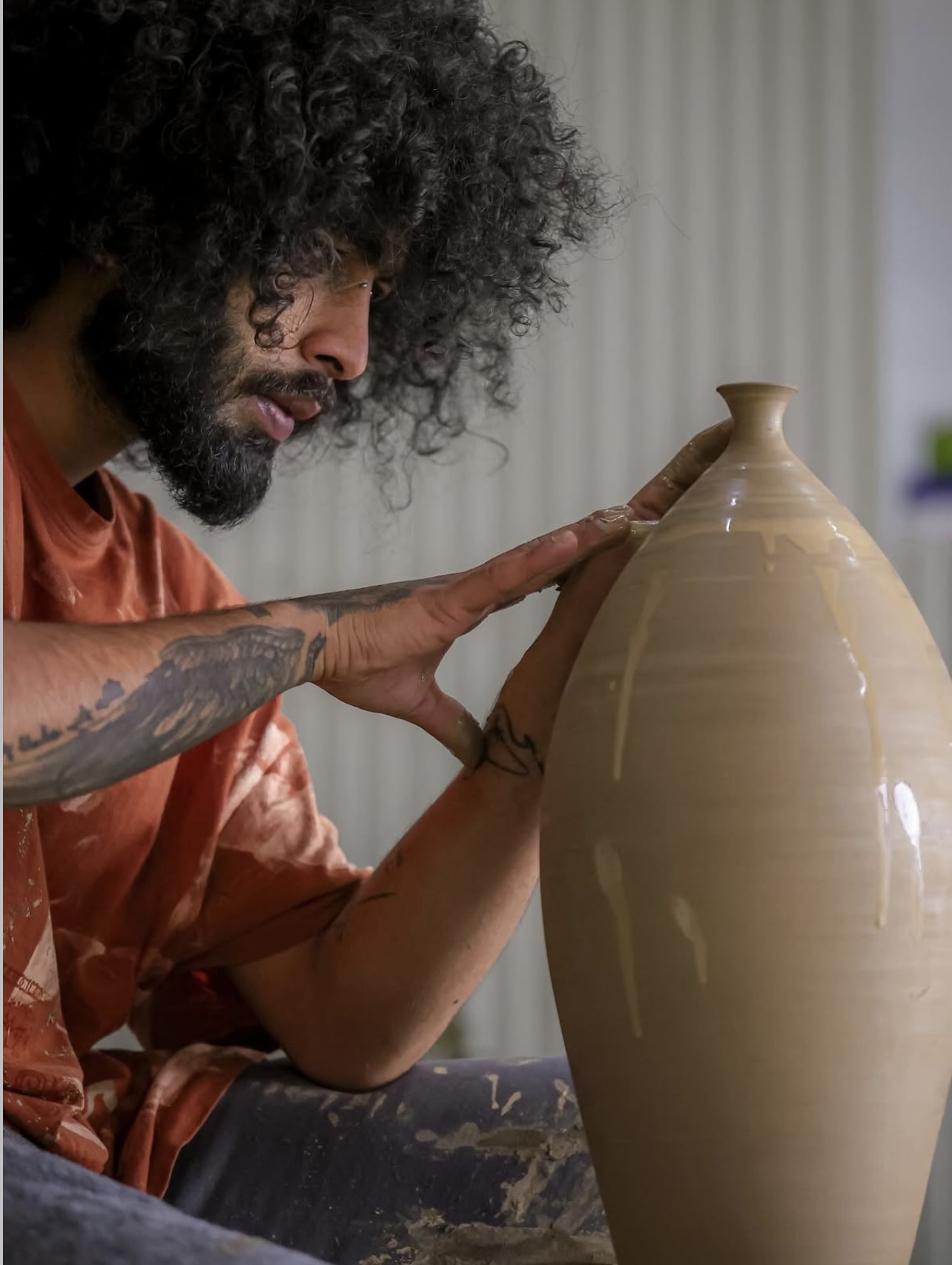
For many first-time participants, the Goa studio becomes their introduction to pottery. Beginners learn foundational techniques of shaping and forming clay, yet the deeper takeaway often goes beyond technique. Clay teaches patience. It asks for attention. It requires acceptance of mistakes as part of growth.
Participants begin to understand what the studio calls the “language of clay”, knowing when to apply pressure, when to pause, and how to respond to the material’s resistance. Beyond the bowl or mug they create, they leave with a renewed comfort in learning something unfamiliar and imperfect.
For those choosing longer retreats, the experience unfolds at a measured pace. Studio sessions typically run from late morning to late afternoon, balancing instruction with independent practice and relaxed breaks. Mornings are free for rest or wellness activities, while evenings invite exploration of Goa or quiet reflection. Weekly community gatherings extend the experience beyond the wheel and worktable, nurturing connection among participants.
Values in Practice: Kindness, Honesty, and Care
Dharamkot Studio speaks often of kindness, honesty, and care, principles that quietly shape its culture. In Goa, these values appear in the way the space is held. There is no pressure to perform, no hierarchy of skill. Participants are supported regardless of experience, encouraged to move at their own pace in a respectful and inclusive environment.
The studio’s focus leans toward functional pottery and expressive forms, with an emphasis on experimentation rather than rigid technique. Surface textures, relaxed silhouettes, and everyday ceramics become avenues for exploration. The goal is not perfection, but presence.
Pottery in a Fast-Paced World
The growing interest in pottery, especially in places like Goa, reflects a larger cultural shift. In a world dominated by screens and accelerated routines, wet clay offers resistance, literal and metaphorical. It demands physical engagement and rewards attention. Working with clay reconnects people to the tactile world and to their own patience.
In a destination often associated with fast experiences and nightlife, pottery presents an alternative. It becomes a way to feel alive through creation rather than consumption. Making something functional with one’s own hands brings a quiet satisfaction that lingers long after the workshop ends.
Building a Creative Ecosystem
Collaboration remains central to the studio’s vision. In Goa, Dharamkot Studio continues to build connections with local artists, cafés, and wellness spaces, gradually forming a broader creative ecosystem. The intention is not only to offer workshops, but to cultivate a network where art, conversation, and shared experiences intersect.
Participants are encouraged to book in advance due to limited seats, arriving in comfortable clothing ready to embrace the inevitable mess of clay. No prior experience is required, only curiosity.
What Lies Ahead
Looking forward, Dharamkot Studio in Goa plans to expand organically. Longer-term pottery and ceramic courses are in development, alongside international ceramic art workshops and community-led events. The team is also working toward more sustained learning programs for those wishing to engage deeply with design and craft, moving beyond short introductions into immersive exploration.
At the same time, new formats of creative retreats are being shaped, combining making, learning, and shared experience in evolving ways that reflect both the coastal landscape and the studio’s founding philosophy.
From mountain beginnings to coastal horizons, Dharamkot Studio continues to create spaces where clay becomes more than material. It becomes connection, between hands and earth, between strangers and community, and between place and presence.