
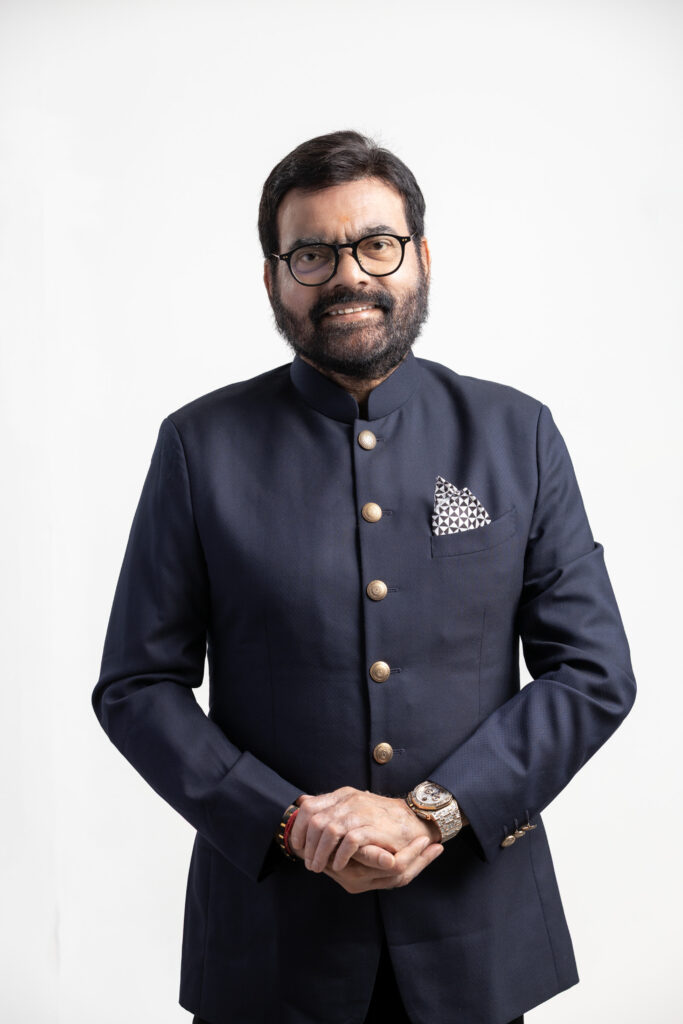
Beginning in 1993 with one restaurant, hospitality entrepreneur Dr. K. Prakash Shetty, founder of the MRG Group, has steadily grown his business. Over the years, this measured expansion has encompassed hotels, real estate, and infrastructure across various cities. His newest undertaking in Panaji, The Riverfront, continues this successful path onto the banks of the Mandovi. This development is notable not only for its scale but also for how meticulously and thoughtfully it integrates into the existing fabric of the city.
Panaji roots its identity in the Mandovi river that flows by the historic city’s banks. The river runs past its institutions, ferry points, government offices and hotels, shifting in mood from a stunning, but functional waterscape in the morning to an illuminated spectacle by night.
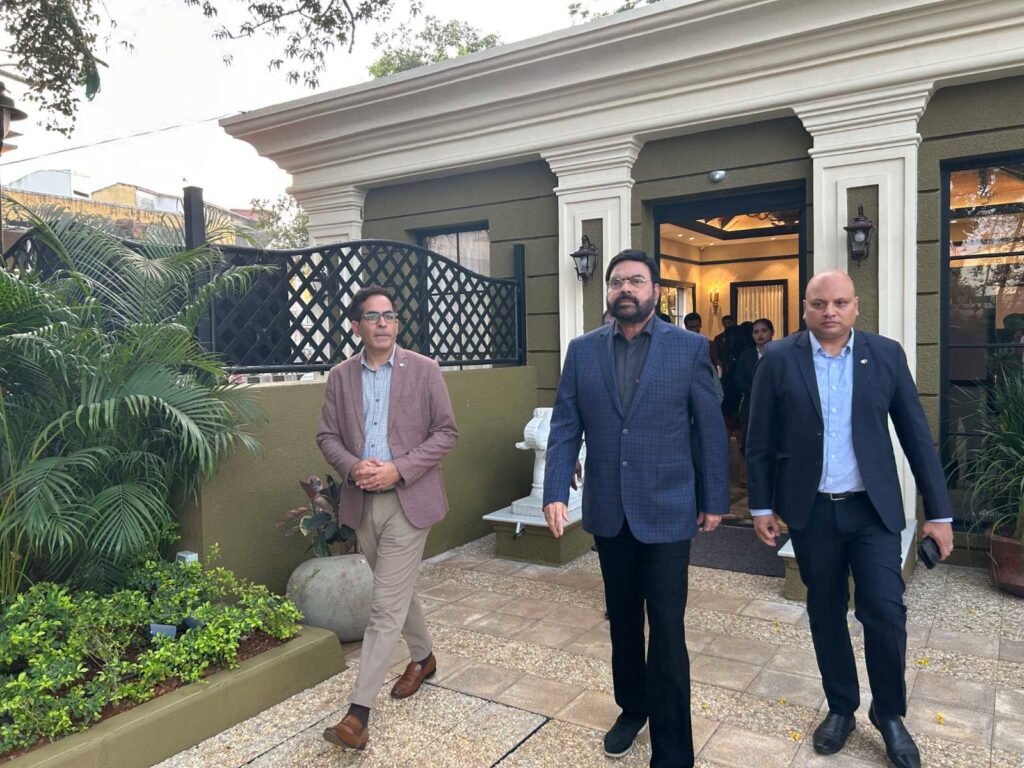
Hospitality entrepreneur Dr. K. Prakash Shetty has launched The Riverfront, a new open-air venue in Panaji. Located right on the banks of the iconic river, near the site of the old Mandovi Hotel, The Riverfront is positioned as the capital city’s largest outdoor event space. This expansive 700-foot venue can accommodate approximately 1,000 guests and boasts a private access jetty, ample parking, and full supporting service infrastructure. However, for Shetty, the project’s significance extends beyond its sheer size.
“The Riverfront was planned as a space that would add value to Panaji’s social and cultural life, not just function as an event venue. From the start, the intention was to build something that respects its surroundings,” he says.
Shetty’s business trajectory did not begin with riverfronts or townships. It began in 1993 with a standalone restaurant in Bengaluru called Banjara. There was no multi-city blueprint then.
“When I started my first restaurant, Banjara, in 1993, it was not part of a grand plan. It was simply an opportunity I believed in,” Shetty states.
He has spoken often of coming from modest beginnings. Born in 1959 in coastal Karnataka, he moved to Bengaluru after graduation in 1980. His early years were defined by limited resources and operational discipline.
“In the early years, every decision mattered because resources were limited,” he says. “I learnt to focus on quality, relationships and long-term credibility rather than quick gains.”
Those constraints shaped his approach to scale. Growth, in his telling, must be earned. The MRG Group, founded in 1993, grew incrementally — from restaurant to hotel, from hotel to multi-city brand, from hospitality into real estate and infrastructure. The name itself signals continuity. MRG draws from family initials — Madhav, Ratna and Gaurav — honouring his late parents and his son, who now serves as Managing Director. The framing has always been generational rather than transactional.
By 2004, the group had entered the hotel sector with the launch of the Goldfinch brand in Bengaluru. Expansion followed to Mangalore, Mumbai, Delhi and Goa. Partnerships with established hospitality names such as Marriott and Hilton followed, including DoubleTree by Hilton in Goa at Ribandar.
Yet when asked about scale, Shetty returns to fundamentals.
“Hospitality attracted me because it is deeply human… It allows you to create experiences and build emotional connections,” he explains.
The early restaurant years, he adds, provided a hands-on education in service and operations.
“Service excellence, attention to detail and consistency are what allow you to scale successfully… Systems and standards are essential if you want to grow without compromising quality,” Shetty says.
That thinking carries into The Riverfront.
Spread along approximately 700 feet of the Mandovi, the venue is largely horizontal. It does not seek vertical dominance. The river remains visible from within the premises. The built components — service areas, parking zones, event infrastructure — are functional rather than ornamental.
“The scale and layout were designed to complement the river and the existing character of Panaji,” Shetty says. “We were careful not to overbuild.”
In a city defined by layered architecture — from Fontainhas to Altinho — restraint is not aesthetic modesty alone. It is practical politics.
The Riverfront’s first event underscored that positioning. Rather than launch with a commercial gala, the venue opened with an inclusive art exhibition involving children and adults with different abilities from institutions supported by Caritas Goa.
The decision, Shetty says, was deliberate.
“We wanted the first event to represent community, creativity and shared expression rather than purely commercial activity,” he says. “Commercial events will follow, but establishing purpose and inclusivity at the beginning sets the right foundation.”
It was a calibrated beginning in a state where private development along public-facing waterfronts often attracts scepticism.
The emphasis on community is not new within the MRG ecosystem. The group’s enterprises currently provide direct and indirect employment to around 3,000 individuals. During the COVID-19 pandemic, over 20,000 families received food kits through initiatives supported by the group. A weekly meal distribution initiative titled Ahara continues across cities.
Recognition has followed over the years, including the Karnataka Rajyotsava Award and a Lifetime Achievement Award by the Times Group. Mangalore University conferred upon him an honorary doctorate in recognition of his social work.
Yet The Riverfront is not framed by Shetty as philanthropy.
Hospitality and real estate, he argues, are linked disciplines.
“Hospitality teaches you how people experience space,” he says. “Real estate teaches you how cities evolve.”
The connective question is longevity.
“In both cases, the question is the same,” he says. “Will this space remain relevant and meaningful years from now?”
That question is particularly sharp in Goa. The state’s tourism economy is shifting. While leisure remains central, there is growing demand for curated experiences — culture, cuisine, wellness, destination weddings and corporate gatherings that extend beyond seasonal peaks.
“I see Goa moving beyond seasonal tourism to becoming a year-round destination driven by events, art, gastronomy and destination weddings,” Shetty says.
Infrastructure that supports that evolution becomes part of the broader hospitality ecosystem. Venues like The Riverfront, in this reading, are enabling spaces. They provide scale without necessitating fresh construction for every large event.
The Riverfront stands out for its stunning vantage as well as from a multi-utility facility point of view. Weddings one week, exhibitions the next, corporate events thereafter. The openness ensures that the natural river vista remains the visual anchor of any celebration or event.
As dusk settles, the distinction is practical rather than poetic. Guests face the Mandovi. The skyline remains visible. The water is not concealed behind the structure.
For Shetty, whose journey began with a modest restaurant in 1993, the Panaji project represents continuity rather than just a business pivot. Growth, he insists, must remain anchored in credibility.
“That mindset has never changed,” he says.
The business journey of Dr. K. Prakash Shetty is a study in strategic, incremental growth, marked not by sudden pivots but by a thoughtful, continuous expansion of scale and scope. What began as a single, foundational restaurant venture has systematically unfolded into a multifaceted business empire. This evolution moved steadily to encompass a full-service hotel, followed by the rigorous process of brand expansion, culminating in the ambitious undertaking of a fully planned township. The latest jewel in this crown, the riverfront venue, is not an outlier but a logical, calculated step in this developmental continuum. It signifies a mature business model that integrates hospitality, real estate, and lifestyle experiences, proving that Dr. Shetty’s strategy is one of deliberate, steady scaling rather than reactive, abrupt shifts.
The ultimate success of this new establishment, “The Riverfront,” will not be determined by the opulence of its launch or the immediate press coverage, but by a much more profound metric: its seamless and complete adoption into the social and cultural rhythm of Panaji. Its long-term viability hinges on its utility and relevance to the lives of Panaji residents.
For the time being, the scene remains one of poised anticipation. The majestic Mandovi River, a silent observer of Panaji’s history and commerce, continues its measured, calm journey, flowing indifferently alongside The Riverfront. The venue sits ready, its doors open, awaiting the city’s verdict on its place within the vibrant narrative of Goa’s capital. The steady, tranquil flow of the river serves as a potent visual analogy, mirroring the patient dedication with which Dr. K. Prakash Shetty continues his journey.