
Set in the serene hinterlands of Goa, Dudhsagar Plantation is a unique eco-tourism farmstay built on a strong foundation of family values, social consciousness, and environmental stewardship. The farmstay is managed by Ashok Malkarnekar, alongside his father, Ajit Malkarnekar, who focuses on running the agricultural operations. The family’s journey is deeply rooted in social service. Ajit and his wife Doris Malkarnekar, originally from Germany, first met in the 1970s while working with renowned social activist Baba Amte, contributing to initiatives that focused on rehabilitating tribal communities and individuals affected by leprosy.
In the 1980s, driven by concerns about the growing “brain drain” from rural India, the couple decided to return to Goa and rehabilitate a barren 50-acre piece of land. Over time, that land evolved into the lush plantation that exists today. Before returning to manage the farm, Ashok worked in the development sector across Germany, Indonesia, and India. His global exposure, combined with memories of family farm holidays in Tuscany, inspired the idea of developing a farmstay in Goa, one that could reconnect urban travellers with the sources of their food and offer an authentic experience of rural life.
Nature, Landscape, and the Experience of Slow Travel
The plantation’s location near the majestic Dudhsagar Waterfalls plays a defining role in the experiences offered to guests. Situated close to the Bhagwan Mahaveer Wildlife Sanctuary, the oldest and largest protected forest in Goa, the property acts as a gateway to the region’s natural landscapes. Rather than promoting rushed day trips to the waterfalls, Dudhsagar Plantation encourages a slower, more immersive approach to travel. Visitors can take jeep safaris or trek through forest trails leading to the falls, but they can also explore lesser-known gems such as hidden waterfalls, ancient temples, and quiet riverbanks nearby.
Spread across fifty acres at the foothills of the biodiverse Western Ghats, the plantation itself resembles a vibrant food forest. Guests stay in five independent cottages nestled within coconut groves and surrounded by tropical vegetation rich with birds and butterflies. Designed using vernacular architecture with locally sourced laterite stone and Mangalore tiles, the cottages prioritise natural light and ventilation over artificial cooling. A natural, chlorine-free swimming pool perched on a hillock further enhances the immersive connection with the surrounding landscape.
Learning, Food, and Sustainable Farming
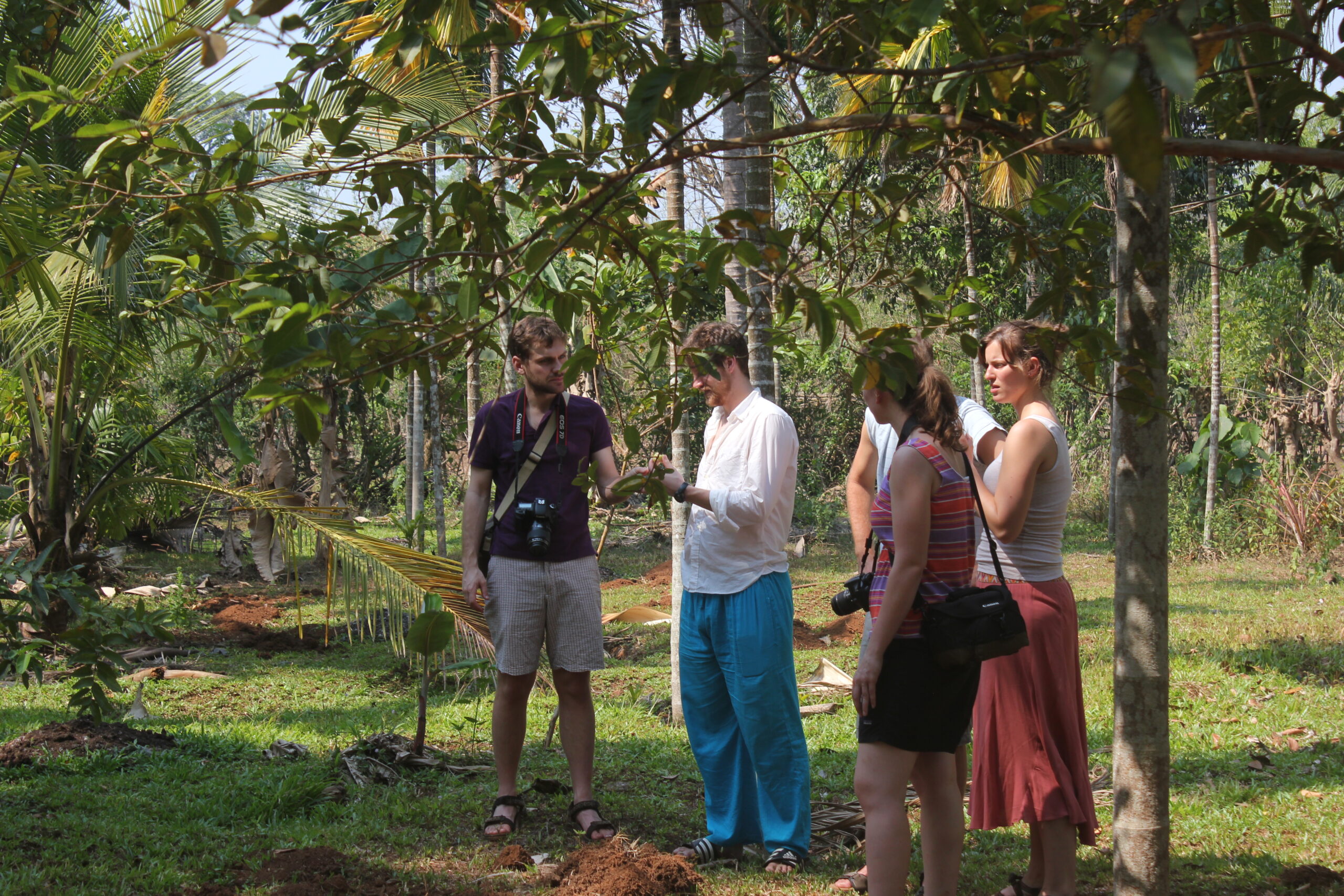
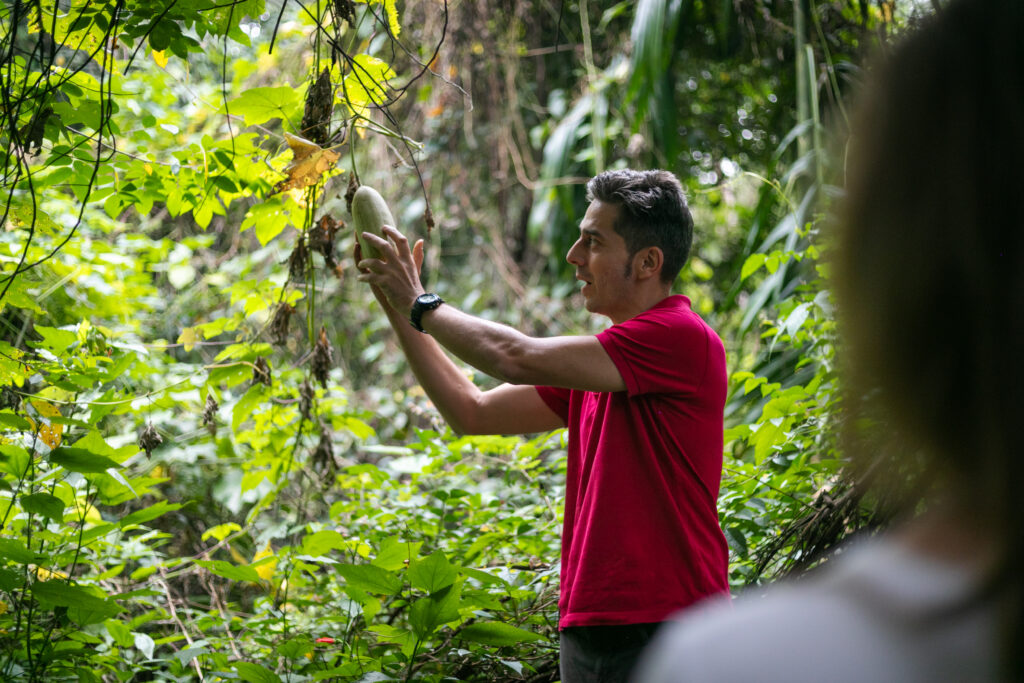
A central part of the Dudhsagar Plantation experience is the “Know Your Spices” farm walk, where visitors explore the spice gardens while learning to identify tropical spices and understand sustainable cultivation practices. The tour introduces guests to the interconnected ecosystem that supports farming, demonstrating how healthy soil, biodiversity, and careful land management allow agriculture to flourish naturally.
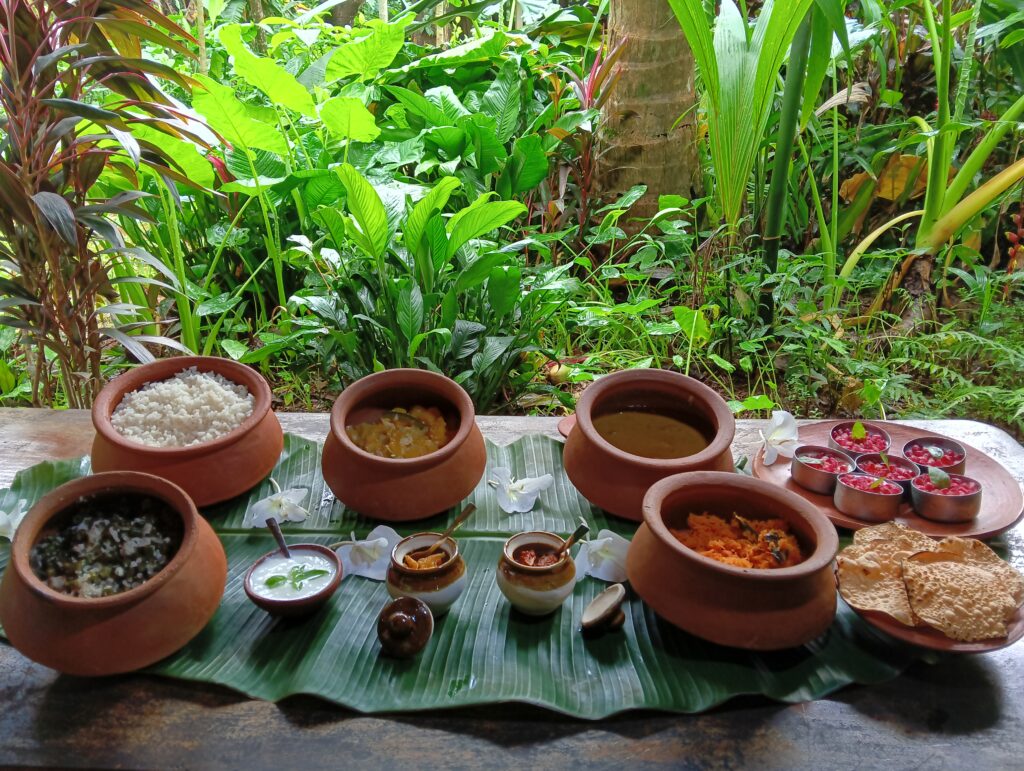
Food at the plantation reflects the same philosophy of authenticity and sustainability. Guests are served home-cooked Goan vegetarian meals in a communal setting designed to encourage interaction. The kitchen uses 100 percent homemade coconut oil, while milk, ghee, and curd come from the farm’s free-range cows. Depending on the season, vegetables grown on the property or foraged from nearby forests are incorporated into the meals. Traditional dishes such as khatkhate, patoli, colocasia preparations, and forest mushrooms offer guests a rare opportunity to experience regional delicacies seldom found in commercial restaurants.
Culture, Craft, and the Spirit of Feni
Dudhsagar Plantation also celebrates Goa’s cultural traditions by integrating local heritage into the guest experience. The property’s architecture reflects regional building styles, while guests can take part in activities such as learning seasonal recipes or watching demonstrations of coconut mat weaving. Local student groups occasionally perform traditional music and dance, creating a deeper cultural exchange and giving visitors insight into Goa’s living traditions.
One of the plantation’s most distinctive features is its heritage distillery dedicated to producing traditional cashew feni. During the seasonal “Cashew Trail,” held between March and May, guests can participate in the entire process, from harvesting cashew apples and stomping them to witnessing the distillation process. The experience is complemented by a specially curated meal centred around the cashew apple. Through its small-batch artisanal label OURO de Goa, the plantation works to preserve and promote traditional feni-making techniques while introducing this iconic Goan spirit to a wider audience.
Sustainability and a Regenerative Vision
Sustainability lies at the heart of Dudhsagar Plantation’s operations. Traditional bunding methods are used to minimise soil erosion and recharge underground aquifers, helping maintain the health of the farm’s two wells. A biogas plant treats blackwater from the cottages and converts it into cooking gas and manure, creating a closed-loop system that reduces waste while supporting agricultural productivity. The plantation also maintains a strict no-single-use-plastic policy, encouraging guests to refill bottles with mineral-rich well water rather than relying on packaged alternatives.
Looking ahead, the family envisions Dudhsagar Plantation as a regenerative tourism enterprise. Their goal is to become a net producer of energy while increasing the proportion of food grown on the property. By demonstrating how tourism can operate in harmony with nature, the plantation hopes to inspire travellers to appreciate low-impact living while supporting conservation and sustainable rural livelihoods.