
Panaji, June 2026 — The Goa Deposit Refund Scheme (DRS) is gaining quiet but steady traction among local beverage producers, with several homegrown brands choosing to integrate the initiative into their operations following its first public pilot at the popular Panjim Potluck event.
At two-day event held recently at Garcia de Orta Garden in Panaji, five Goan brands — Rosita (Tap House), Borecha, Maka Di, Kati Patang, and Thirsty Crocodile — participated by adopting QR-coded packaging on glass bottles and tin cans. Festival-goers returned over 1,300 units of packaging during the event.
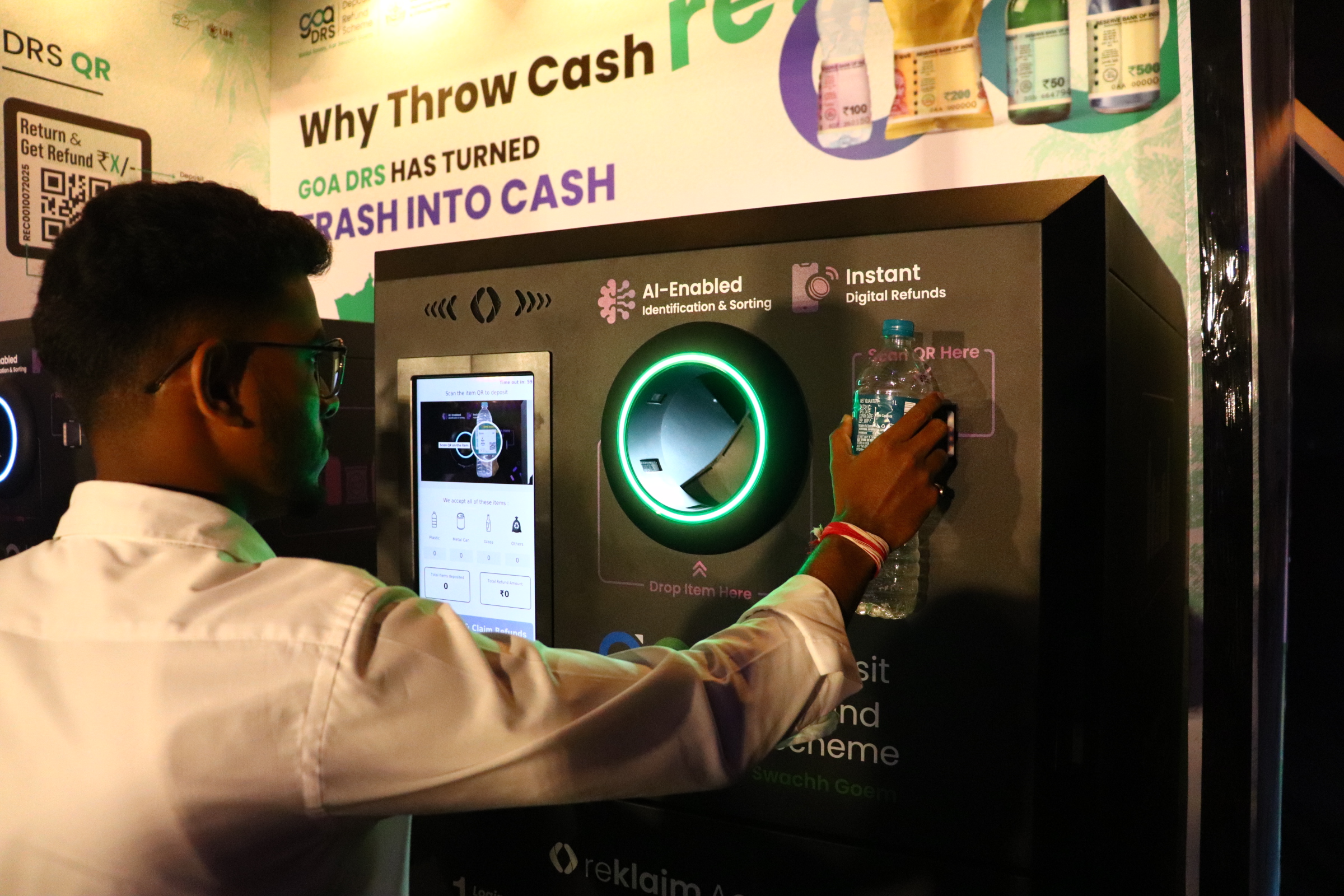
The system works simply: consumers scan a QR code on participating packaging and return empty bottles or cans at designated collection points, completing a loop that keeps packaging out of landfills. Several brands that witnessed the pilot are now moving toward formal participation.
Rohan Pereira, co-founder of Usacha Rum, India’s first rum agricole described the initiative as the kind of on-ground infrastructure the industry has been missing: “We are very impressed with what DRS is doing here. I look forward to seeing more from them across all of Goa, and hopefully across all of India.”
Clement DeSylva of Aani Ek, a popular Feni brand, who tested the system firsthand at the Cashew Festival, said the experience convinced him immediately. “This is a fantastic initiative and it seems to work really well. I did a demo and we’re waiting to get our QR code. For every bottle that comes in, Ani-ek is willing to add ₹5 to the bottle as a contribution to DRS and I hope everybody supports this scheme.”
Dr. Mohan Krishna Balivada, Founder of Cheers and producer of Kadamba Single Malt Whiskey, took part in a live demo at the Spirit of Goa in Colva. “I personally experienced the DRS demo and got the refund. The system is planet friendly and good for Goa.”
Nitin Rane, Brand Owner of Tap House (Rosita), said the pilot confirmed something the brand had long believed: “At Rosita, we’ve always believed that great experiences shouldn’t come at the planet’s expense. Being part of Goa DRS’s first pilot at Panjim Potluck was a natural fit for us, our customers responded with genuine enthusiasm, and it showed us that responsible consumption and a good time can absolutely go hand in hand.”
Ishan Varshnei, CEO of Latambarcem Brewers, whose brands Borecha and Maka Di participated in the pilot, reflected on what the response from the public revealed: “We have always believed that growth should never come at the cost of the environment. From reducing wastage and optimising raw material usage to embracing sustainable packaging solutions like aluminium cans and glass bottles, every step we take is guided by the vision of building a cleaner and more responsible future. Goa is not just where we operate, it is home. We feel a deep responsibility towards preserving its beauty, culture, and spirit for generations to come. Our partnership with Goa DRS at Panjim Potluck became a powerful reminder that people genuinely want to make responsible choices; they simply need the right systems and collective effort around them. We are proud to contribute towards creating a more sustainable Goa.”
Goa DRS has been conducting public awareness activities across Goa since April, ahead of the scheme’s formal launch. To date, 132 village panchayats and 6 Urban Local Bodies have issued NOCs for Reverse Vending Machine installations, with the first RVM inaugurated at INS Mandovi last week.