
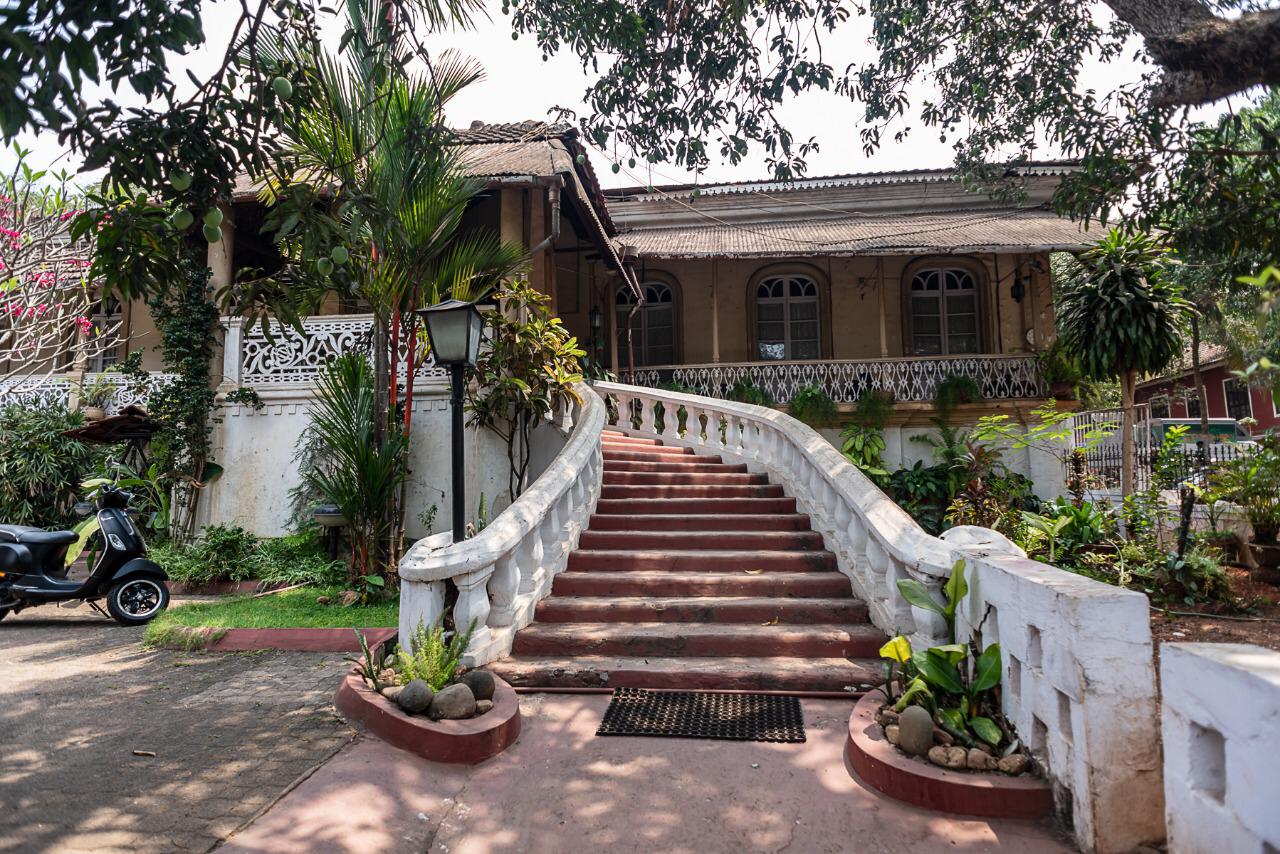
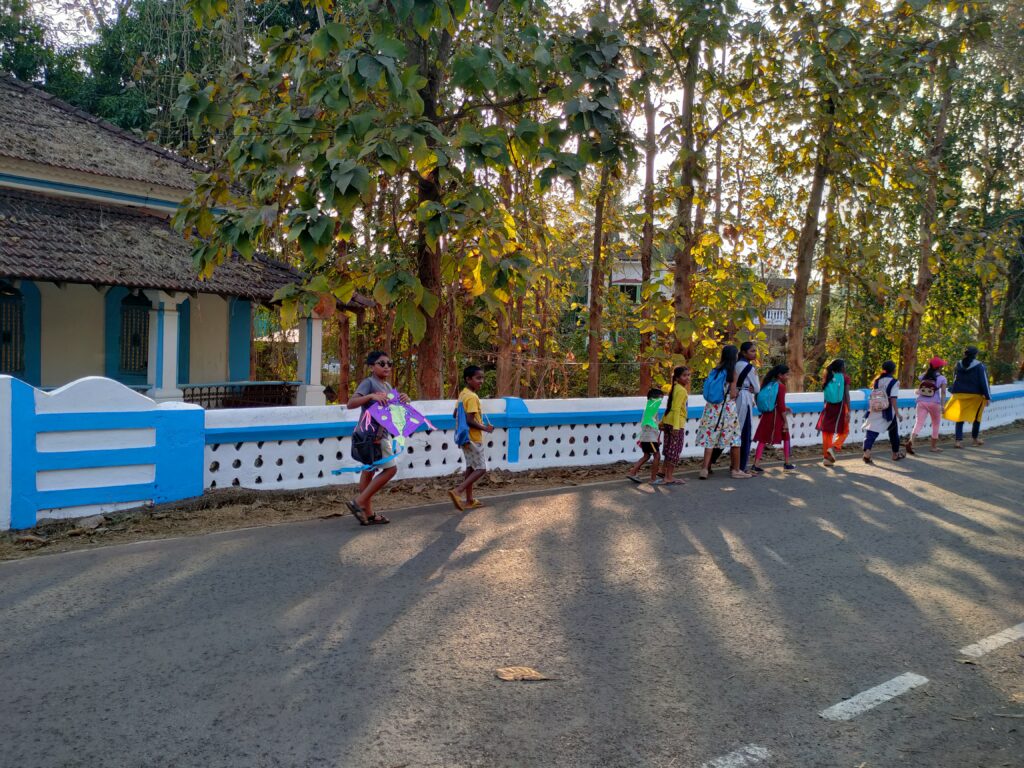
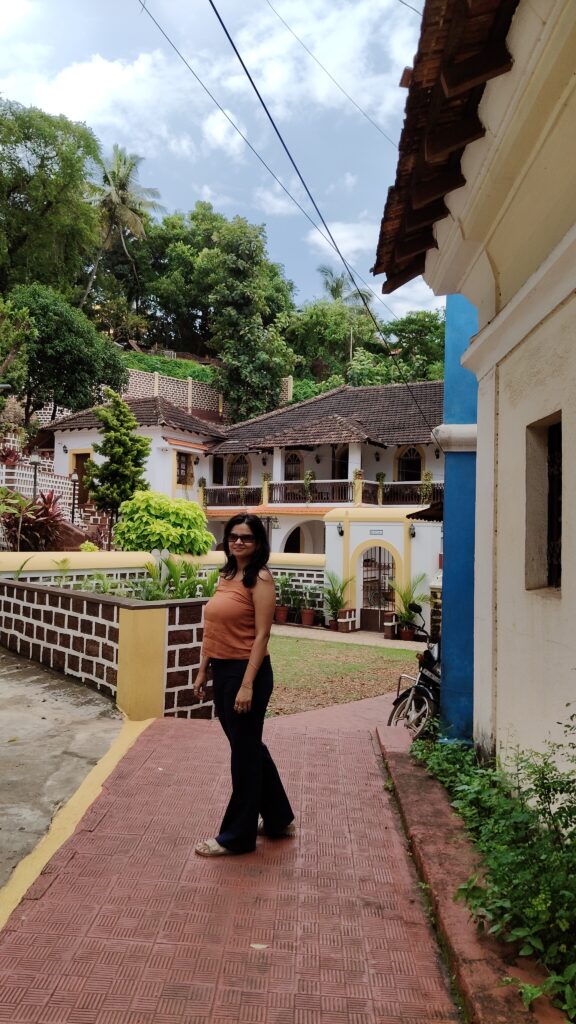
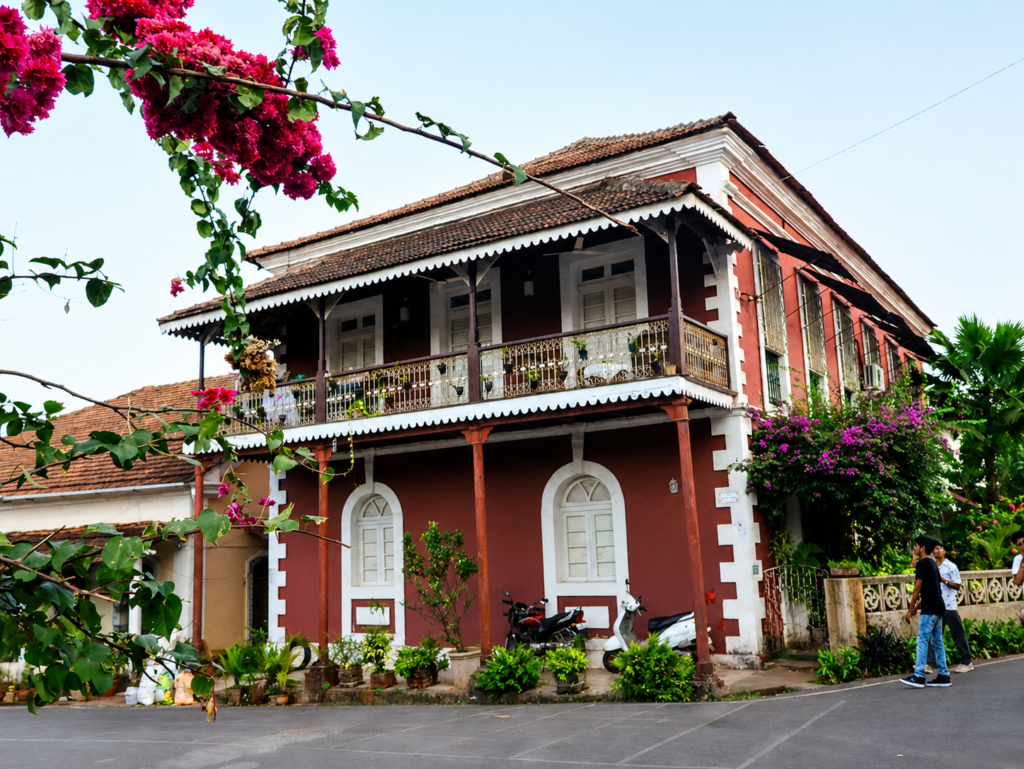
Goa’s heritage homes are more than structures built of laterite, wood and plaster. They are repositories of family histories, everyday rituals, craftsmanship and memories that have shaped the character of its neighbourhoods for generations. Through Goa Heritage Houses, a passion project rooted in photography and exploration, Nicole Suares, Author, Content Strategist and Photographer, documents these architectural fragments before time, neglect and rapid urbanisation erase them from the landscape.
A Journey Through Goa’s Old Neighbourhoods
The story of Goa Heritage Houses began with a simple habit that developed during childhood. Growing up in Margao, Nicole spent time wandering through old neighbourhoods with a silver Canon point-and-shoot camera, photographing whatever captured her imagination. Among the most compelling subjects were the town’s grand heritage homes.
Areas such as Comba and Church Square retained much of their historic character, offering an intimate view of Goa’s architectural past. Over the years, however, her attention shifted towards houses that had been forgotten or abandoned. Some stood concealed behind vegetation, their walls covered in creepers while layers of paint and plaster slowly deteriorated.
These homes, once filled with people, conversations and everyday life, appeared increasingly distant from the communities around them. Goa Heritage Houses emerged from a desire to document them as they were, celebrating their beauty while also acknowledging the marks left by age and neglect.
Preserving More Than a Structure
At the heart of Goa Heritage Houses is the idea that documenting a home can preserve a part of its memory. Even when families have moved away, the spaces they inhabited continue to carry traces of their presence.
The project seeks to create an evolving visual archive that connects Goa’s past with its present. It hopes to renew interest in traditional homes and encourage greater appreciation for a form of architectural heritage that is distinctive to the region and significant within the broader Indian context.
Rather than presenting heritage as something frozen in time, Goa Heritage Houses records what remains, allowing viewers to see both the character these properties once possessed and the changes they have undergone.
Finding Beauty in the Details
The project does not limit itself to grand houses or formally recognised heritage properties. Its lens extends to the smaller details that give a neighbourhood its personality.
A colourful door, an ornate window, a balcony, a weathered doorway or an architectural feature partly concealed by vegetation can become a subject. Everyday scenes also find their way into the photographs: a curious dog appearing at a window or a resident sitting at a sewing machine in the narrow lanes of Fontainhas.
For Goa Heritage Houses, these moments are equally important because heritage is not confined to buildings alone. It exists in the relationship between homes, streets and the people who continue to inhabit them.
Architecture with Personality
The details found in traditional Goan homes reveal a strong appreciation for craftsmanship and visual expression. Features such as windows, balconies and door frames may appear familiar across different properties, yet no two homes necessarily interpret them in exactly the same way. This individuality is what makes these elements worth documenting. Architecture is viewed not simply as brick and mortar, but as an artistic expression shaped by the people who built and lived in these houses.
Traditional Goan architecture also draws its identity from materials and decorative features closely associated with the region. Laterite and wood form the foundation of many historic structures, while details such as mother-of-pearl windows, lion gateposts and cockerel finials add distinctive character.
Contemporary architecture continues to reinterpret some of these ideas, demonstrating that traditional influences need not disappear in the face of modern design. Instead, they can be adapted and introduced into new contexts.
The Stories Beyond the Lens
While architecture remains central to Goa Heritage Houses, some of its most memorable experiences have come through encounters with people. During one drive along a familiar route, a scene involving a woman, two cats and a dog caught Nicole’s attention. After stopping to capture the moment, a conversation followed. The woman’s affection for her animals, including a stray puppy she had recently adopted during the monsoon, transformed an ordinary photographic encounter into a personal story.
Such interactions reinforce the idea that Goa’s built heritage cannot be separated from the communities that surround it. Behind every doorway and balcony lies the possibility of a human story, while even an incidental encounter on a village road can reveal something about the warmth and character of the place.
Heritage in a Changing Goa
Goa’s architectural landscape is changing rapidly as development reshapes its towns and villages. For Goa Heritage Houses, the answer does not lie in rejecting modernisation, but in finding ways for contemporary needs and heritage conservation to work together.
Traditional knowledge and architectural ideas can be combined with modern conservation practices to create solutions that benefit homeowners, governments and heritage practitioners. Such an approach could allow historic structures and neighbourhoods to remain relevant without sacrificing the qualities that make them distinctive.
The challenge is particularly pressing because once a heritage home or neighbourhood disappears, its loss cannot always be reversed. Preserving individual details, streetscapes and structures therefore becomes part of safeguarding the larger cultural identity of Goa.
A Collective Responsibility
Goa Heritage Houses remains a personal pursuit driven primarily by Nicole’s love of photography and walks through familiar and unfamiliar neighbourhoods. She does not approach the project as a formal preservation campaign, but the resulting documentation raises questions that extend far beyond photography.
Its appeal lies in making people pause and look at what might otherwise be overlooked. A weathered façade, an elaborate window or a quiet lane can become a reminder of the architectural language that once shaped everyday life across Goa.
The project also places responsibility on all those connected to the state’s heritage. Homeowners, communities, government bodies, architects, conservationists and citizens each have a role to play in determining what survives.
Looking Ahead
There are currently no formal exhibitions, books or collaborations planned for Goa Heritage Houses. Yet the project itself represents the beginning of a larger possibility: creating an enduring visual record of Goa’s architectural heritage through continued observation and documentation.
Its message is ultimately one of collective stewardship. Goa’s colourful neighbourhoods and historic homes form a crucial part of its identity, and preserving them requires recognising their value before they disappear.
For Goa Heritage Houses, the hope is that development does not come at the cost of character. Modern Goa can continue to evolve while retaining the architectural memories that distinguish it from other places. The task is to ensure that the old and the new are given an opportunity to coexist, allowing future generations to recognise not only how Goa developed, but also what made it unique.