
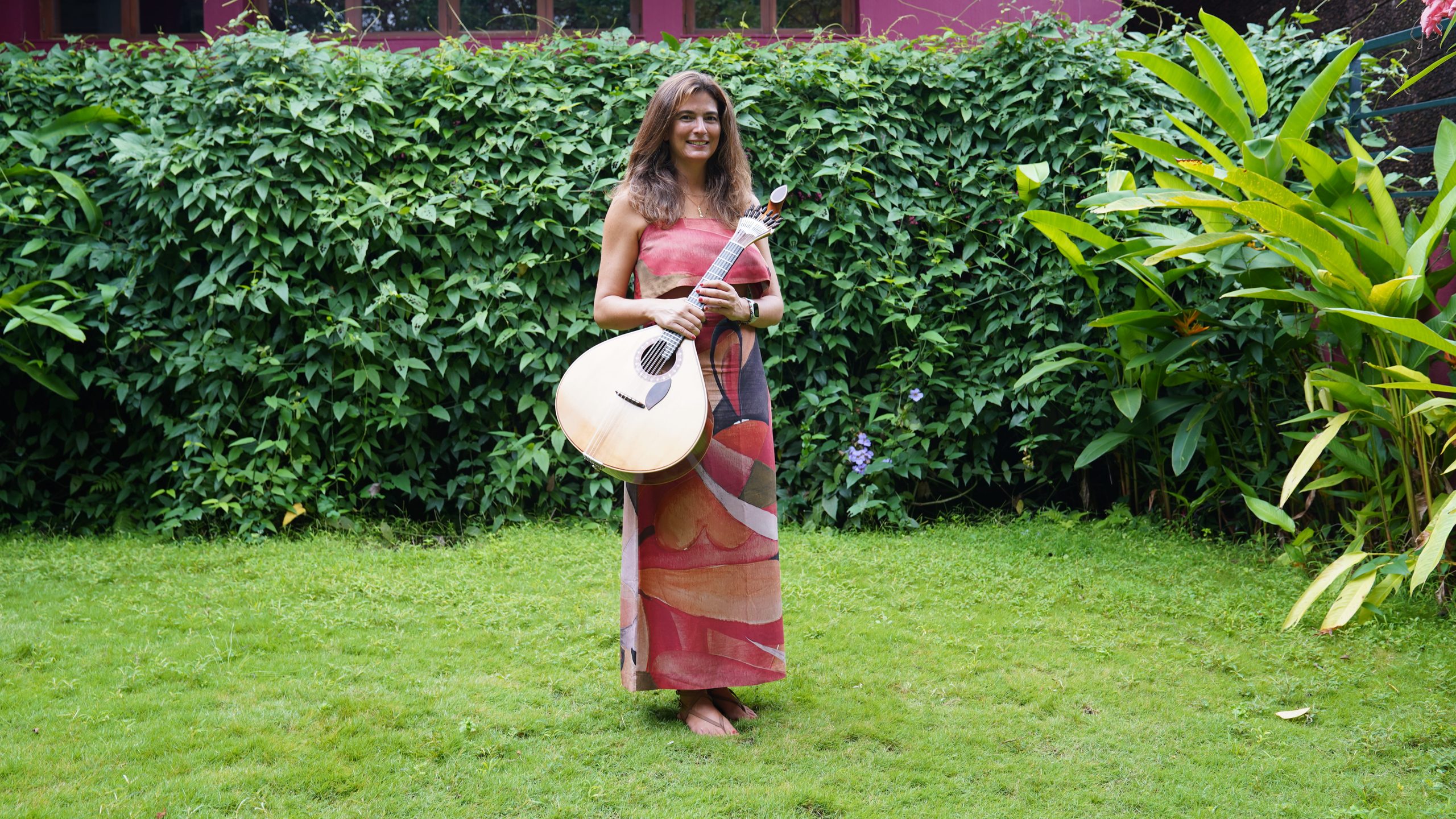
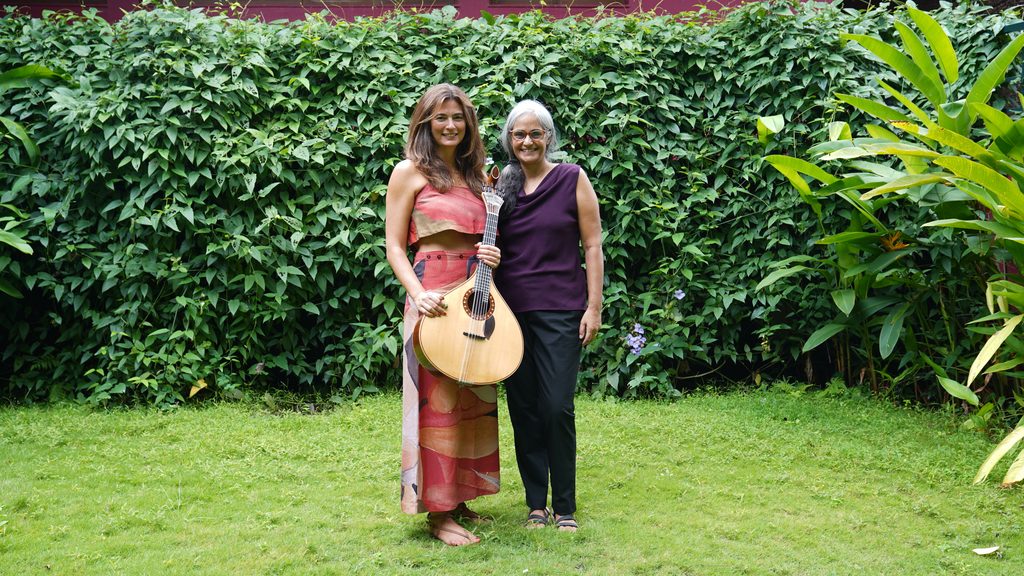
Portuguese guitarist Marta Pereira da Costa, the first woman to play the Portuguese guitar professionally in Fado, is in Goa for a special musical collaboration with Goan sitarist Ustad Chhote Rahimat Khan. With a career that has taken her to international stages including the Kennedy Center and Lincoln Center in the USA, Marta speaks about breaking into a traditionally male-dominated musical space, taking the Portuguese guitar beyond Fado, and exploring connections between Portuguese and Indian classical music. The conversation also touches on her approach to collaboration, her first experience performing in Goa, and the community initiatives supported by the fundraiser organised by Communicare Trust, founded by Nalini Elvino de Sousa.
You made history as the first woman to play the Portuguese guitar professionally in Fado. Looking back, how significant was it for you to enter a tradition that had been predominantly male for centuries?
When I started playing the Portuguese guitar, I was discovering the instrument and its history. I wasn’t aware that it was traditionally played by men. When I started performing in Fado houses, I realised there were no women playing the Portuguese guitar. I focused on learning from my masters rather than on that difference. Today, more women are learning the instrument, so I feel I helped open a door for a new generation.
What drove you to the Portuguese guitar and why? What made you want to pursue it professionally?
My father was responsible for introducing me to the Portuguese guitar. He loved Fado and its sound. I had played the piano from the age of four and initially wanted to become a pianist. When I started playing the Portuguese guitar, I fell in love with its sound and the possibilities it offered. I studied civil engineering and worked for eight years, but in 2012 I decided to leave that behind and focus completely on the Portuguese guitar and music. From there on I never looked back.
Your performance will culminate in a collaboration with Goan sitarist Ustad Chhote Rahimat Khan. What interests you most about bringing the Portuguese guitar into Indian classical music?
Both instruments express feelings and have their own musical languages. I challenged Chote to play a traditional Fado on the sitar, while he challenged me to play a raga on the Portuguese guitar. We will try to connect through our different musical traditions and find a meeting point between them. The concert at Ravindra Bhavan in Margai is all about expressing our feelings and connecting together.
What are you expecting from Ustad Chhote Rahimat Khan? How do you see the fusion of the guitar and the sitar?
We need to try it together. I think we will build it naturally by listening and responding to each other. It will be a conversation with some improvisation, where we bring our own musical characteristics and phrasing. I’m very excited about it.
The concert is also a fundraiser, right? Supporting Communicare Trust community programs. How does performing for a cause add another dimension to the evening for you?
It makes me even happier to help and support. I think musicians have a responsibility to put their gifts at the service of others. It’s beautiful that one concert can help support so many people and projects.
You have performed at international venues such as the Kennedy Center and Lincoln Center and have received recognition from the Amália Rodrigues Foundation and the IPMA Awards. How has performing for audiences around the world influenced your musical identity?
Travelling and performing around the world has allowed me to receive feedback from different audiences. I try to remain authentic while connecting with each country, its people and its music. The Portuguese guitar is very powerful, and even people unfamiliar with the instrument can connect with its sound.
Lastly, tell us more about the fundraising projects for the concert?
Nalini Elvino de Sousa: First, I want to thank Emmanuel for helping bring a Portuguese musician to Goa and supporting an NGO through the concert. We hope this can become something that continues with future musicians. The donations will support several projects. One is Cantara for the Community, where we take Konkani music into schools and teach students about the history of music through live performances and old recording formats such as shellac records and gramophones. We also have a book project involving students from Goa, Portugal and Brazil, focusing on themes such as life on land and mangroves. Another project supports Little Angels, a home for differently abled boys. We are helping them create a vegetable garden and are also starting a bakery to give them greater interaction with the community and a source of sustainability and income. These are just some of the projects that we at Communicare Trust work on through the years.
The concert, organised by Communicare Trust with the Consulate General of Portugal in Goa and Camões – Centro de Língua Portuguesa, will be held at Ravindra Bhavan, Margao, on September 24, where Marta Pereira da Costa will perform with Goa’s sitar maestro Ustad Chhote Rahimat Khan, a sixth-generation exponent of the Dharwad Gharana, celebrating the musical traditions of Portugal and India.