
From ancient sea forts and mist-laden forests to heritage villages, eco-conscious villas, and soulful coastal cuisine, Sindhudurg offers an immersive glimpse into Maharashtra’s untamed Konkan charm.
Tucked away along Maharashtra’s rugged Konkan coastline, just beyond Goa’s bustling tourist circuit, Sindhudurg is a destination for travellers seeking slow, meaningful experiences. Fringed by historic sea forts, lush backwaters, and rain-drenched landscapes, this coastal district transforms into a breathtaking monsoon retreat where nature takes centre stage.
As the rains arrive, Sindhudurg comes alive in cinematic fashion — cliffs disappear beneath drifting mist, winding forest trails glisten under fresh showers, and secluded beaches take on a dramatic, windswept beauty. This is not the conventional beach holiday; it is a place for those who find serenity in storms and poetry in solitude.
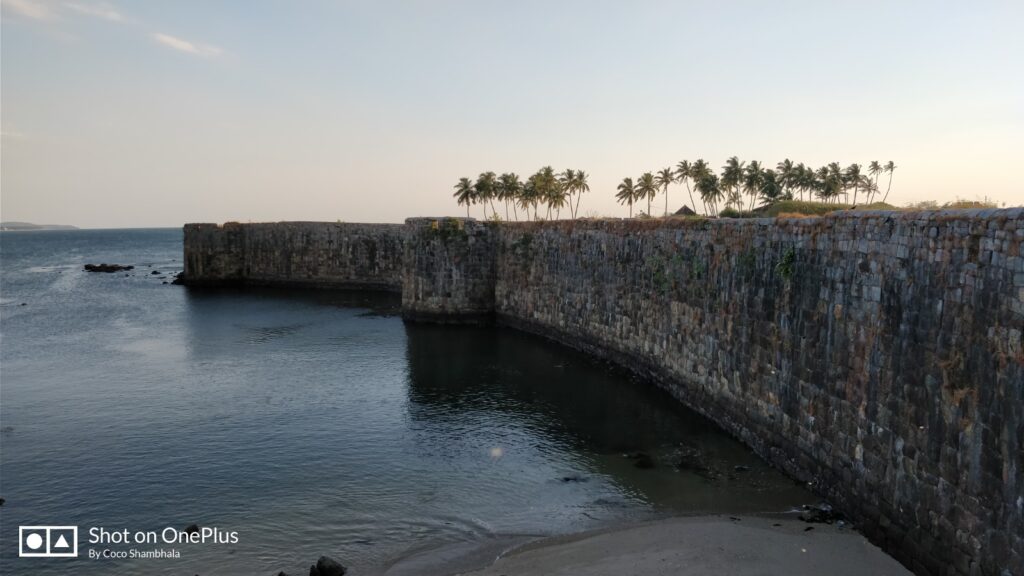
Among Sindhudurg’s most iconic landmarks is the majestic Sindhudurg Fort, located off the shores of Malvan. Commissioned by Chhatrapati Shivaji Maharaj between 1664 and 1667, the fort was strategically built to safeguard the Konkan coast from foreign naval invasions. Rising from a rocky island in the Arabian Sea, the sprawling 48-acre fortress is enclosed by nearly three kilometres of imposing ramparts that have withstood centuries of crashing waves and monsoon winds. Once home to royal quarters and military outposts, the fort remains a remarkable symbol of Maratha naval strength and architectural brilliance.
A scenic drive of about ninety minutes leads to another historic marvel — Vijaydurg Fort. Originally believed to have been constructed by the Shilahara dynasty in the 12th century and later expanded by Shivaji Maharaj after its capture in 1653, Vijaydurg stands proudly along the Arabian Sea. Its unique promontory location made it naturally fortified, accessible from three sides only by sea. The fort later served as the naval headquarters of the legendary Maratha admiral Kanhoji Angre and continues to echo stories of maritime power and resilience.
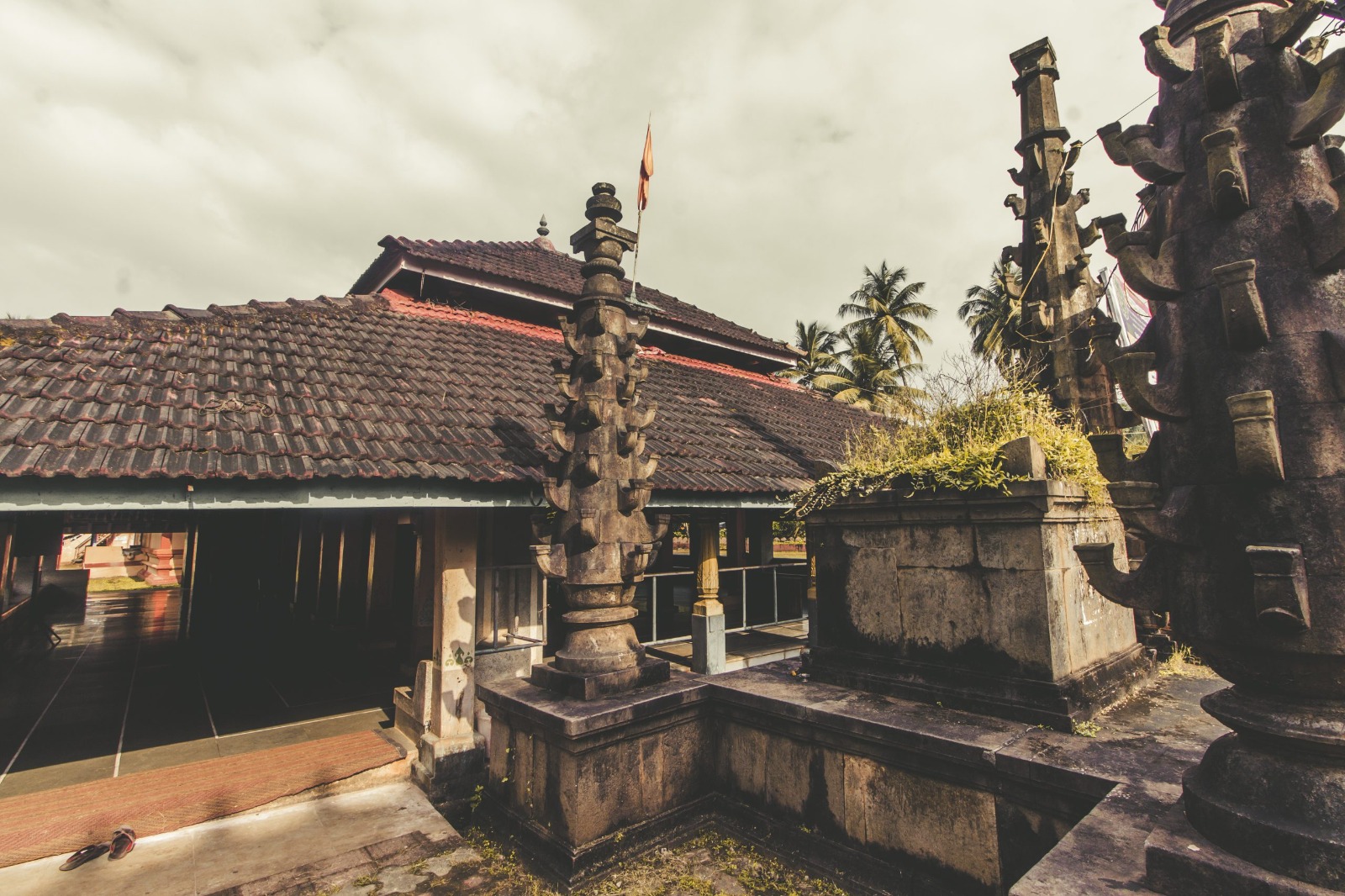
For a quieter, spiritual experience, the Shri Wageshwar Temple in Malvan offers a serene retreat. Dedicated to Lord Shiva and deeply revered by local fishing communities, the temple is believed to date back several centuries. Its name derives from the words “Wagh” (tiger) and “Ishwar” (God), reflecting local folklore and faith.
Built in the traditional Konkan architectural style, the temple features a sturdy stone base, laterite walls, and a sloping tiled roof designed to endure the region’s heavy monsoons. Inside, the sanctum houses a sacred Shivling, while beautifully carved wooden pillars and an open courtyard lend the space a timeless simplicity. Smaller shrines dedicated to Ganapati and Devi Bhavani further enrich its spiritual atmosphere.
Yet, the true charm of Sindhudurg lies beyond its monuments. It lives in the rhythm of monsoon-fed forests, hidden waterfalls, quiet coastal roads, and villages untouched by hurried tourism. Just a short drive from Goa, Sindhudurg feels worlds away — grounded, raw, and refreshingly authentic.
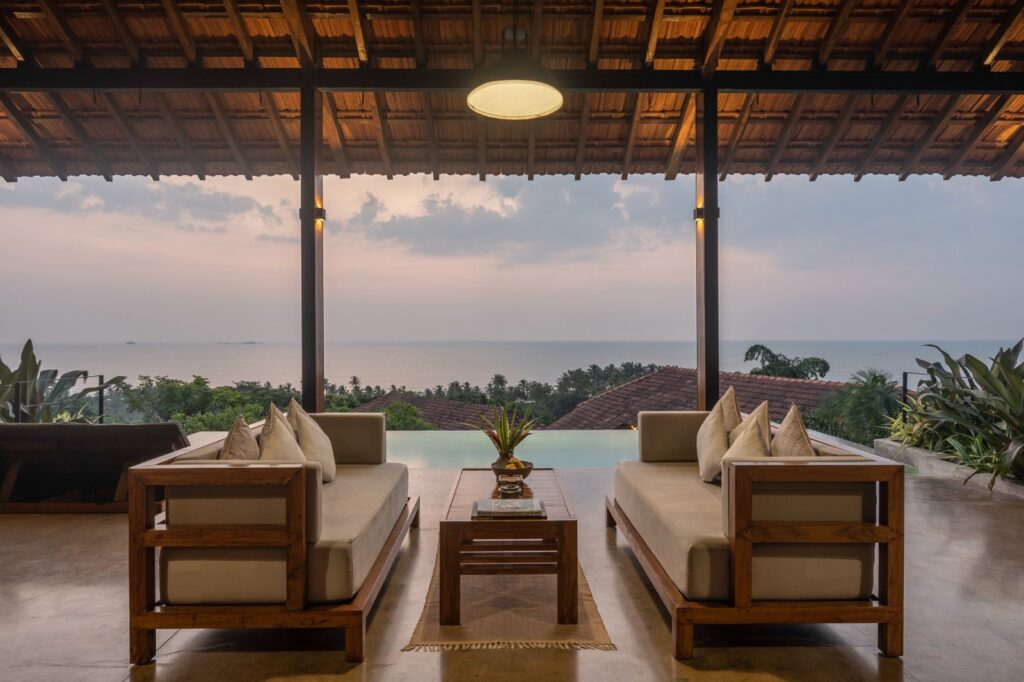
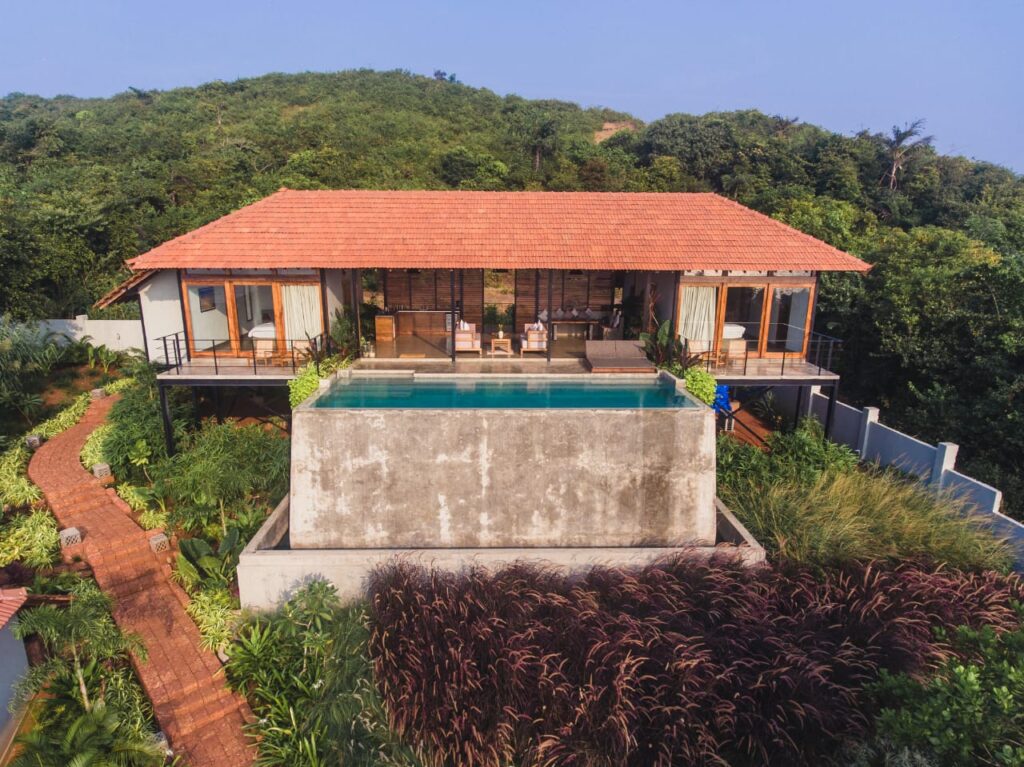
No visit to the region is complete without experiencing Coco Shambhala, one of Sindhudurg’s most distinctive eco-luxury villa retreats. Designed with sustainability at its core, the property blends mindful architecture with the surrounding natural landscape and local culture. The vision behind Coco Shambhala is rooted in responsible tourism — creating luxurious experiences while remaining deeply respectful of the environment. During the monsoon season, the retreat also offers curated packages that allow guests to fully embrace the magic of the Konkan rains.
In Sindhudurg, the monsoon is not merely a season — it is an experience. One that invites travellers to slow down, breathe deeply, and rediscover beauty in nature’s wild, unfiltered form.