
The Journey of Sawani Shetye
For Sawani Shetye, history has never been confined to textbooks or timelines. It has always been alive, etched into stone temples, whispered through folk traditions, and embedded in everyday landscapes. An archaeologist by training and a researcher by instinct, she approaches the past not as something distant, but as a living continuum that shapes the present.
Currently pursuing her PhD at Goa University, Sawani’s work sits at the intersection of archaeology, history, and cultural studies. Yet, long before academia formalised her path, her childhood quietly set the foundation for the career she would eventually build.
A Childhood Rooted in Curiosity
Growing up in Goa, travel and discovery were central to her upbringing. Family trips were never merely vacations; they were immersive cultural explorations. Encouraged by her father, she learned to read maps, understand local histories, and visit museums and heritage sites wherever they went.
Books became companions, and questions became habits. Rather than memorising facts, she found herself wondering why events occurred and how people thought and lived. This early fascination with human behaviour, psychology, and history would eventually evolve into a clear academic calling. By the time she completed her tenth standard, she had already decided her future lay in archaeology.
Shaping an Academic Path
Her educational journey unfolded naturally. A graduation degree in History laid the groundwork for understanding historical processes and sources, after which she pursued a Master’s in Archaeology. During this time, she specialised in Indian temple architecture, iconography, and cultural history, fields that would come to define her research voice.
Today, her doctoral work focuses on Vaishnavism in Goa, studied through archaeological evidence, inscriptions, temple traditions, and living practices. Her research seeks to understand how belief systems evolve, adapt, and endure over centuries, bridging material remains with intangible cultural memory. Rather than treating archaeology as excavation alone, she views it as a way to reconstruct entire worlds.
Reading Temples as Living Texts
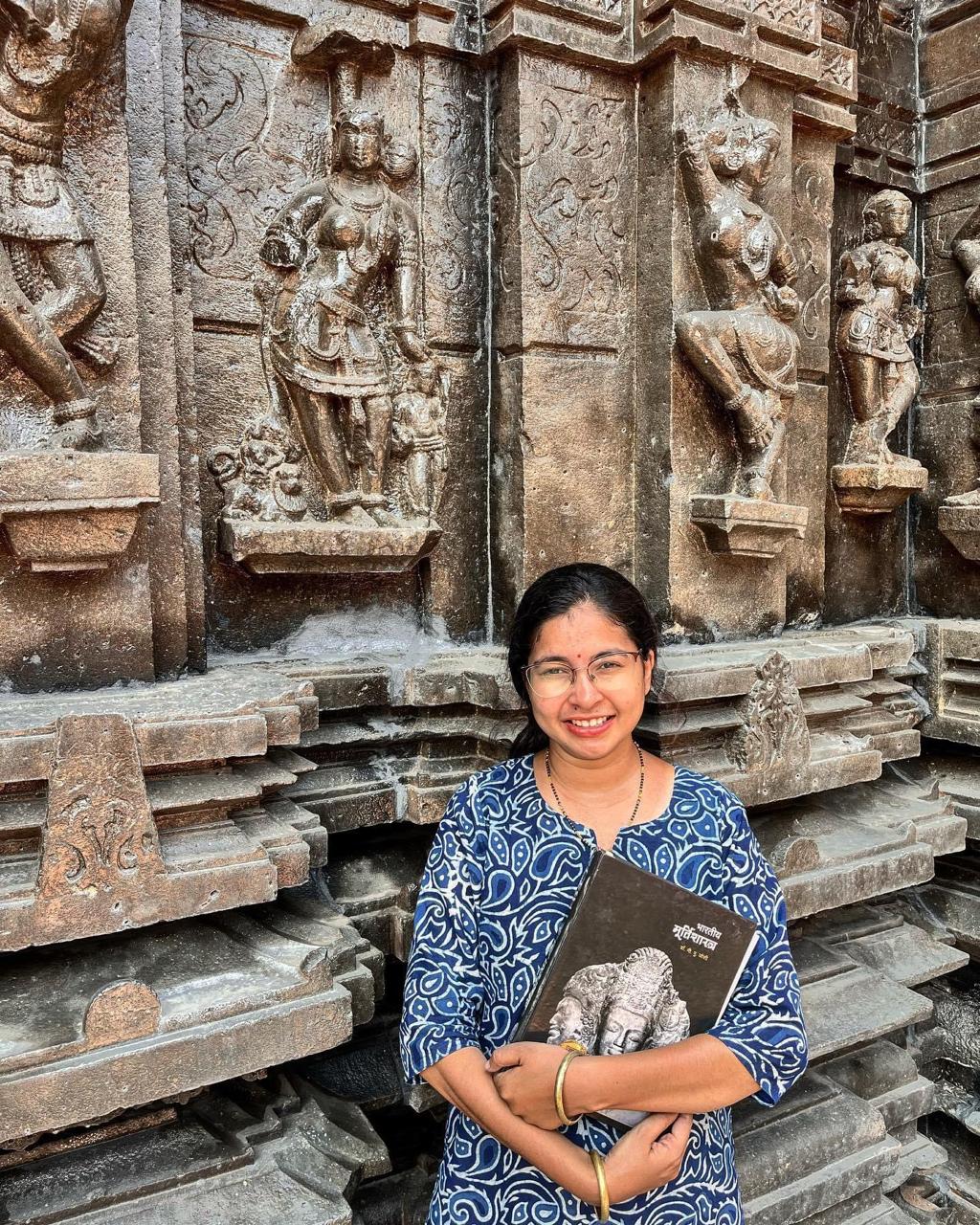
Temple architecture holds a special place in Sawani’s work. To her, these structures are not merely places of worship but complex cultural documents carved in stone. Every pillar, motif, and sculptural element carries meaning, blending science, symbolism, aesthetics, and spirituality.
She is particularly fascinated by narrative iconography, where epics, local legends, and philosophical ideas unfold visually across walls and ceilings. These carvings, she believes, function as timeless storytellers, communicating devotion and history across generations.
Her research also extends to Kaavi art traditions across Goa, Maharashtra, and Karnataka. Through these murals, she observes a remarkable confluence of regional styles and external influences. Rather than rigid artistic forms, Kaavi paintings reveal culture as fluid, adaptive, and layered, a visual archive of social interaction. For her, Indian art has always been functional and devotional at once, inseparable from daily life.
Reframing Goa Through Heritage Walks
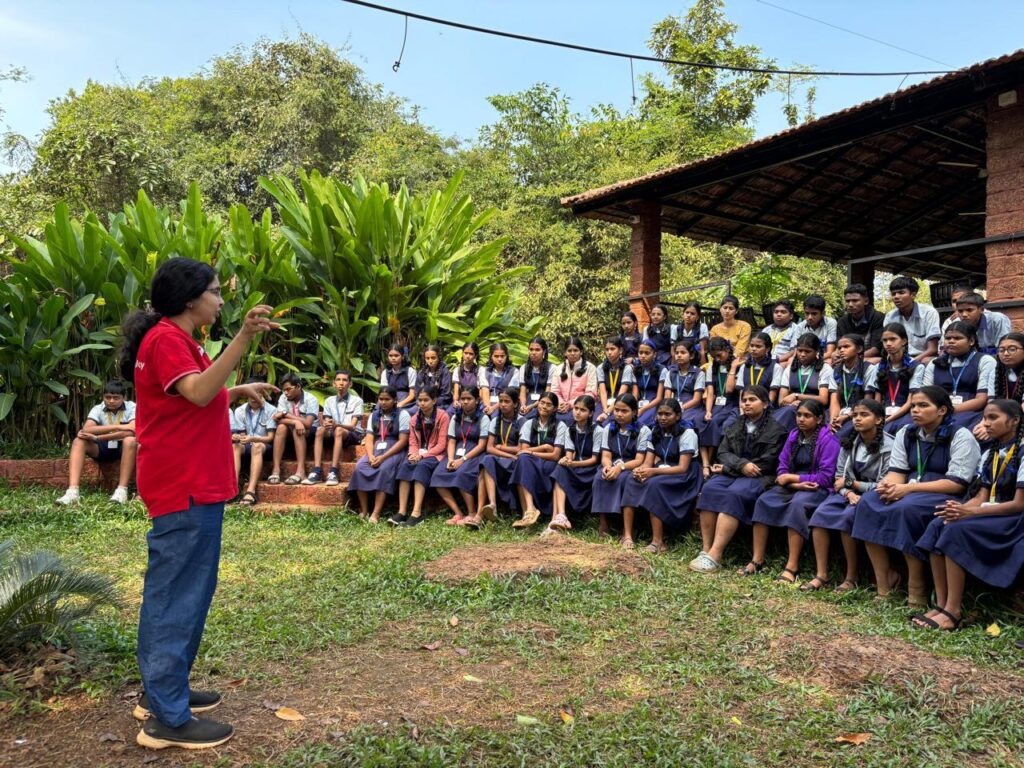
Sawani’s work is not confined to academic spaces. After completing her post-graduation, she began teaching and leading students to heritage sites across the state. What began as informal educational visits slowly grew into something larger when people outside her classrooms asked to join. This organic interest led to the founding of Bhoomij Heritage Consultancy, through which she curates heritage walks and cultural experiences.
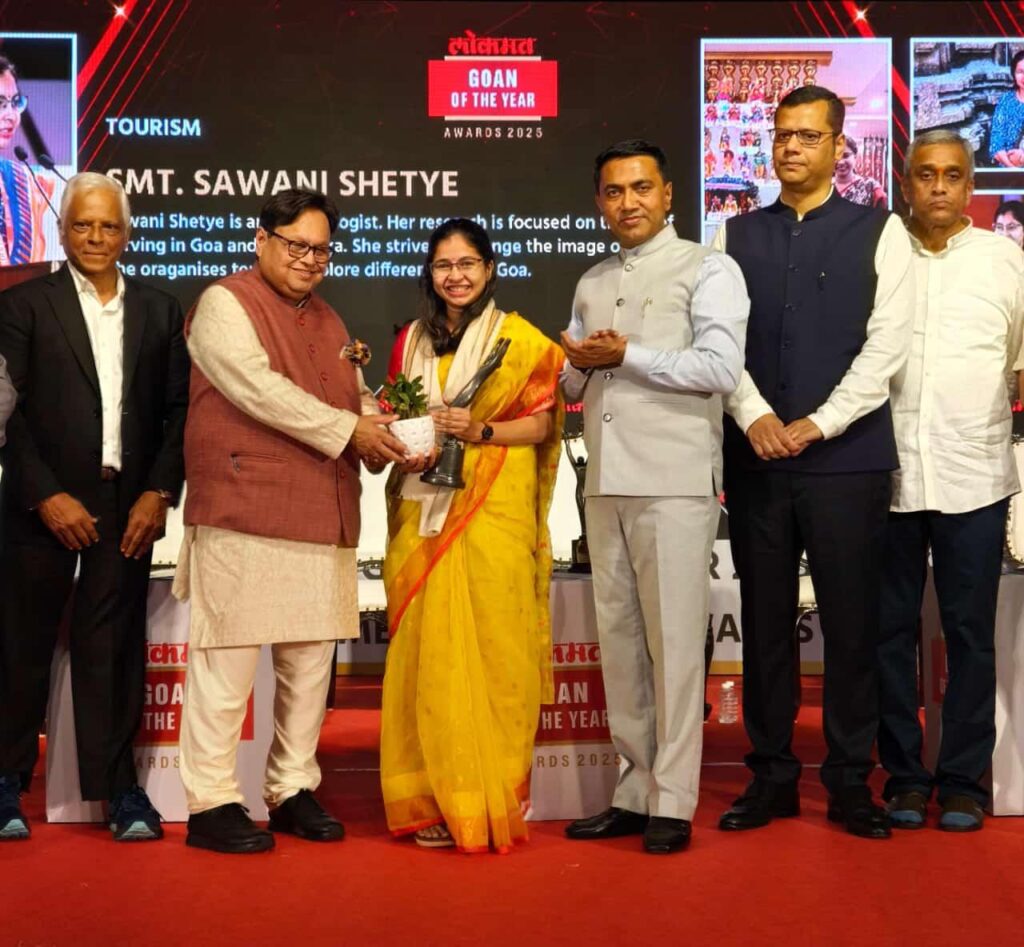
Her goal is simple yet transformative: to help people see Goa beyond its postcard image of beaches and nightlife. Through temple complexes, old settlements, architectural remains, and forgotten narratives, participants encounter a deeper civilisational landscape.
By understanding iconography, climate-responsive architecture, agrarian histories, and folk practices, visitors begin to see Goa not merely as a destination, but as a layered cultural ecosystem. For Sawani, these tours are acts of reconnection, linking people to place, memory, and identity.
Making History Accessible
Public engagement remains central to her mission. Over the years, she has contributed to several documentaries on Goan history, many created in animated formats to simplify complex narratives for younger audiences. She also runs a YouTube channel where she documents historical sites and explains their significance in an approachable, conversational manner.
The response has been heartening. Families watch the videos together, and students discover that history can feel relatable rather than intimidating. For her, this democratisation of knowledge is deeply rewarding.
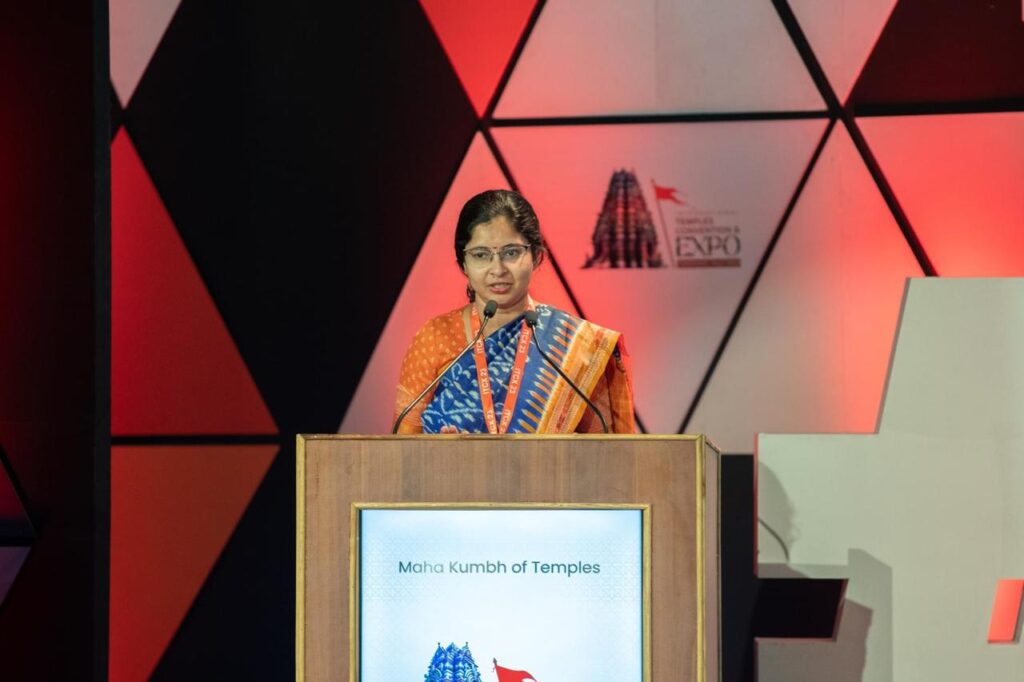
A recent appearance on a widely followed podcast further amplified her reach. Discussing Goa’s lesser-known historical transitions with academic clarity and balance, the episode crossed over a lakh views within a day. Listeners praised the research-driven approach, many sharing that it changed how they perceived the region. Moments like these reaffirm her belief in public history, scholarship that steps outside classrooms and speaks directly to communities.
Heritage Beyond Monuments
Interestingly, Sawani’s connection to heritage extends beyond archives and temples. She is closely involved with Dr. Malik’s Farms, where agriculture forms part of everyday life. Working with coconuts, fruits, vegetables, and cattle, she experiences the rhythms of rural living firsthand.
For her, farming is not separate from history. It is living heritage, an unbroken continuity of food traditions, ecological knowledge, and cultural practices passed down generations. The land, she says, teaches patience and perspective in ways that academic research cannot.
Balancing Many Worlds
Balancing multiple roles, researcher, educator, heritage curator, and farm facilitator, might seem demanding, but Sawani views them as interconnected rather than separate. Each dimension informs the other. Scholarship enriches her tours, outreach strengthens her research, and farming grounds her philosophy.
What keeps her motivated is a clear purpose: to document, preserve, and present Goa’s cultural and agricultural legacy responsibly.
Looking Ahead
As she continues her academic and outreach work, Sawani hopes more people recognise that heritage is not something distant or fragile, it is something lived daily. Preserving culture begins with understanding it, valuing it, and passing it on consciously.
Through research, storytelling, and grassroots engagement, she is quietly ensuring that Goa’s past is not forgotten, but continually rediscovered. In her world, history is not behind us. It walks beside us, waiting to be noticed.