
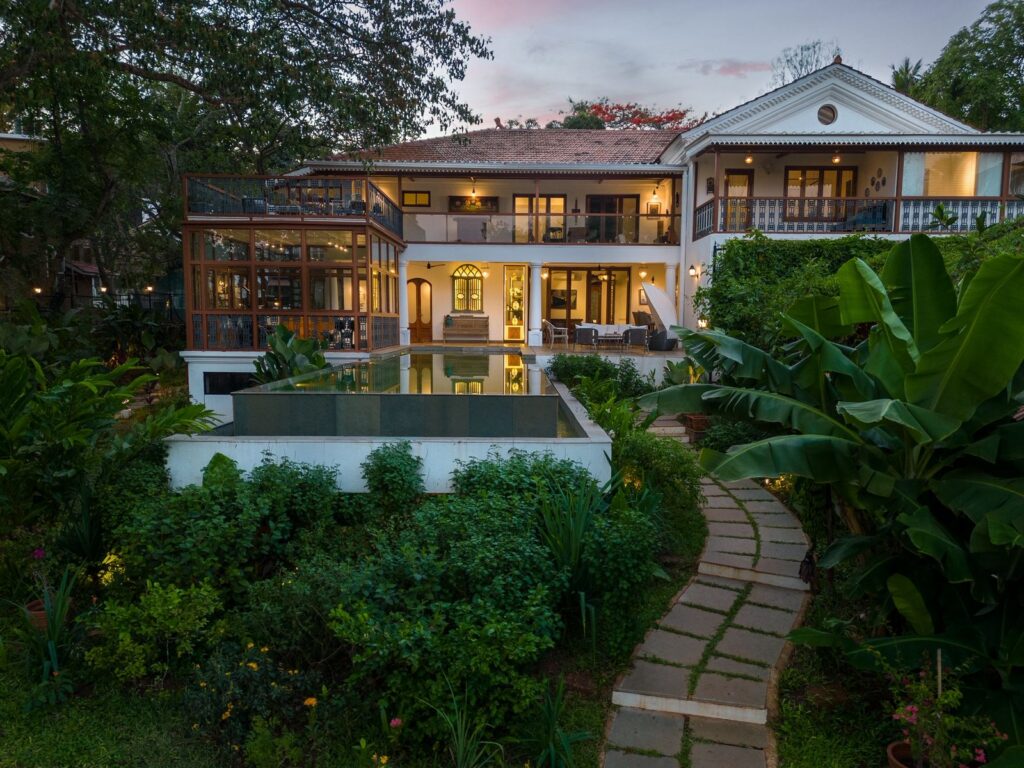

Set within the quiet village landscape of Pilerne in Goa, Seven Doors House stands not merely as a restored residence but as a continuing conversation between architecture, ecology, and cultural memory. What was once a fragile, timeworn structure has been carefully revived into a five-bedroom heritage home that honours its past while embracing the rhythms of contemporary life.
Owned by Leenika Jacob and Deepak Jacob, the house reflects a deeply personal commitment to preservation rather than replacement. Instead of erasing history to make way for the new, the couple chose to restore the building’s original spirit, guided by architects Dean D’Cruz and Ashika Nadaph, with conservation expertise from Jeernodhar and stained glass artistry by Glass Studio.
The result is a home that feels both grounded in history and fully alive in the present.
The Meaning Behind the Name
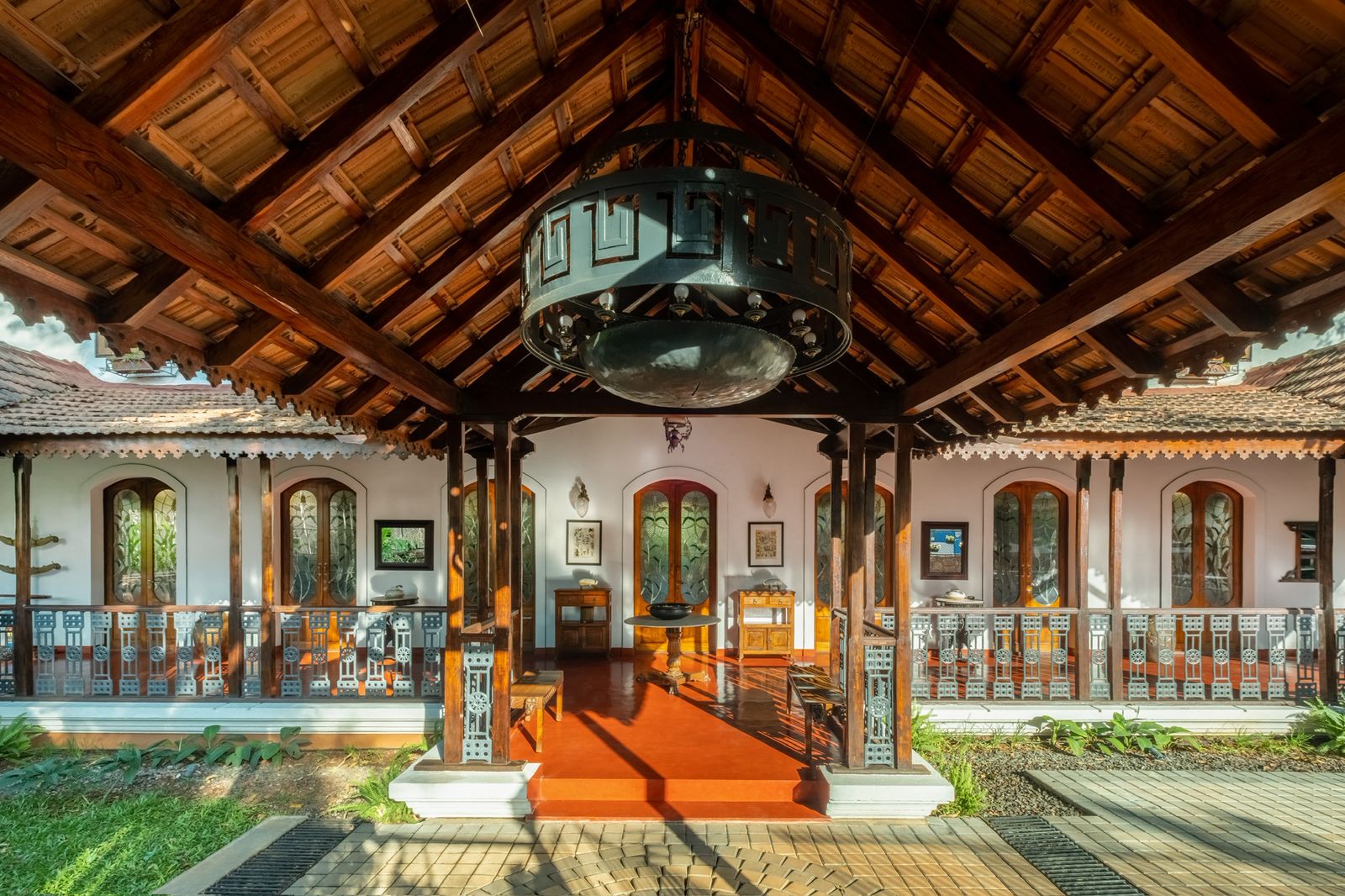
The identity of the house begins with its façade. Seven distinct doors line the front verandah, each leading into a different part of the home. Yet these doors represent more than architectural symmetry.
They serve as metaphors for the guiding principles behind the restoration, sustainability, material reuse, local craftsmanship, environmental responsiveness, cultural continuity, adaptive design, and community connection. Each threshold symbolises a passage into a philosophy that shaped the revival of the house. Together, they tell a layered story of transformation without erasure.
Architecture That Breathes
Originally built in 1932 as a single-storey Goan residence, the structure followed the classic Saraswat–Portuguese typology: broad verandahs, lime-plastered laterite walls, a sloping Mangalore tile roof, and a dignified symmetrical frontage. Decades of neglect had left it vulnerable. Termites hollowed the rafters, the plaster peeled away, and portions of the roof had collapsed.
Rather than demolish it, the restoration embraced adaptive reuse. The original hip roof, essential for heavy monsoon runoff, was lifted and temporarily supported to insert a discreet upper slab, creating additional space without disturbing the home’s familiar silhouette. Salvageable timber beams were cleaned, treated with linseed oil, and reinstated. Where replacement was necessary, locally sourced sal wood was used and assembled through traditional joinery rather than modern shortcuts.
The preserved walls, wooden beams, and window openings maintain the house’s historical authenticity. Even the date of construction remains etched into a roof beam in the master bedroom, a quiet signature from another era.
Materials Rooted in Place
Seven Doors House draws its strength from materials that belong to the land itself. Laterite stone forms the structural base, regulating interior temperatures through its porous, breathable nature. Lime plaster allows the walls to flex and age gracefully, avoiding the moisture traps created by cement. Terracotta Mangalore tiles crown the roof, their curved profiles guiding monsoon rain away with ease.
Sentinel lions crafted by Goa Potteries sit atop the roofline, a distinctly Goan detail that bridges vernacular craft and architectural character. Inside, reclaimed wood carries the patina of time. Antique doors and windows retain their subtle imperfections. Oxide floors keep bedrooms cool underfoot, while honey-toned Kota stone lends durability to common areas. Clay tiles from the original roof find new life once more.
The house demonstrates that sustainability need not rely on futuristic technology; it can emerge from inherited wisdom, where reuse becomes instinct and character grows from age.
A Landscape Older Than the House
Beyond the walls, the property unfolds into a garden that feels untamed yet intentional. Century-old Mankhurad mango trees, older than the house itself, share space with rain trees, silk cotton, jackfruit, breadfruit, moringa, bananas, love apple, and bimbli.
Recently shaped into a permaculture garden, the landscape continues to evolve with the seasons. Guests wander through shaded paths, discovering fruit-laden branches and pockets of stillness. The garden is not ornamental; it is productive, ecological, and deeply connected to the rhythms of the tropics.
A Layered History
The land itself carries a notable legacy tied to Moreno de Souza, the Jesuit priest, Konkani writer, translator, and historian whose family once owned the property. Known for his literary contributions and for his research into Goa’s churches, he played a significant role in preserving the region’s linguistic and cultural identity.
His association adds an intellectual and cultural dimension to the site, linking the house not only to architectural heritage but also to the broader narrative of Goan scholarship and memory.
Living With Climate, Not Against It
What distinguishes Seven Doors House from many restored properties is its responsiveness to the environment. The building does not resist the tropical climate, it adapts to it.
Verandahs invite cross-ventilation. Lime walls breathe. The raised roof channels rain. Shaded openings temper the sun. Rainwater harvesting and passive cooling reduce dependency on mechanical systems.
The house listens to the elements, moving with wind, sun, and monsoon rather than fighting them. This approach reflects a regional intelligence passed down through generations and thoughtfully reinterpreted today.
Craft, Care, and Continuity
Maintaining such a structure requires patience and specialised skill. Tropical humidity tests every surface, and traditional materials demand routine care. Wood is periodically nourished with linseed oil. Lime plaster requires little more than a damp wipe to renew its finish.
Authentic restoration also depends on craftsmen familiar with historical techniques, artisans who understand how older materials behave and how to repair them sympathetically. The process is slower and often costlier, but it ensures longevity and integrity.
The Experience of Slow Living
Today, the house functions as an invitation to a gentler pace of life. It encourages what locals call sussegad, an unhurried, contented way of being.
Days unfold through simple pleasures: shared meals, long reads in quiet nooks, garden walks, a dip in the pool, or conversations about the village’s past. Hosts often share stories of the house and its surroundings, deepening visitors’ connection to the place. Rather than offering spectacle, Seven Doors House offers stillness.
A Story Still Being Written
Seven Doors House ultimately demonstrates that restoration is not about freezing a building in time. It is about allowing heritage to remain lived-in and evolving.
Through thoughtful adaptation, regional materials, and respect for craftsmanship, the home proves that the most sustainable future may lie in reviving what already exists. Behind each of its seven doors is not just a room, but a chapter, one that continues to grow with every season and every guest who crosses its threshold.