
A Life Reoriented by Clay
Tanushree Basnet’s path to pottery did not begin in a studio, but in the structured corridors of pharmaceutical work. Trained as a pharmacist, her early career moved through production, marketing, and public relations roles across Sikkim and Assam. Yet beneath this conventional professional arc lay a persistent pull toward a slower, more intentional way of living, one that ultimately redirected her life toward craft, travel, and earth-based making.
Roots, Restlessness, and the Search for Meaning
Originally from Assam and of Nepali heritage, Tanushree’s creative inclination was evident long before she found clay. Knitting, crochet, drawing, and sketching were constant companions, though none offered a lasting sense of grounding. This restlessness manifested in frequent professional shifts and, eventually, in a decisive departure from her nine-to-five routine. Seeking clarity and simplicity, she chose a nomadic phase, embracing a banjaran way of life that allowed space for reflection and self-discovery.
Walking the Mountains, Learning to Observe
Tanushree’s months in the Himalayas were formative. Based for a time in Rajhana near New Shimla, she undertook extensive pilgrimages and treks including the Char Dham Yatra, Amarnath Yatra, Vaishno Devi, and journeys through Kareri Lake, Boh Valley, Bijli Mahadev, Malana, Tosh, Jalon Jot, and the demanding Shrikhand Mahadev Yatra. Travel, inspired in part by minimalist and low-cost exploration philosophies, sharpened her observational skills. Moving through landscapes on foot instilled patience, awareness, and humility, qualities that would later shape her relationship with clay.
Andretta: The First Encounter with Pottery
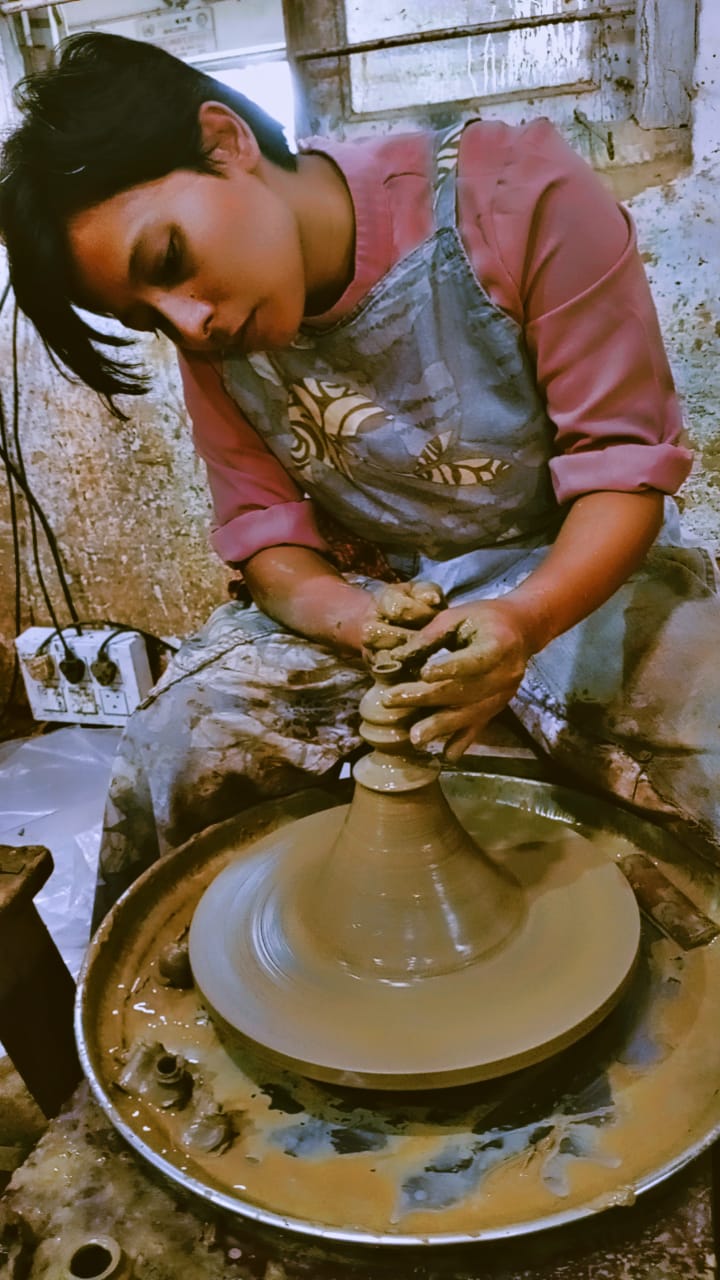
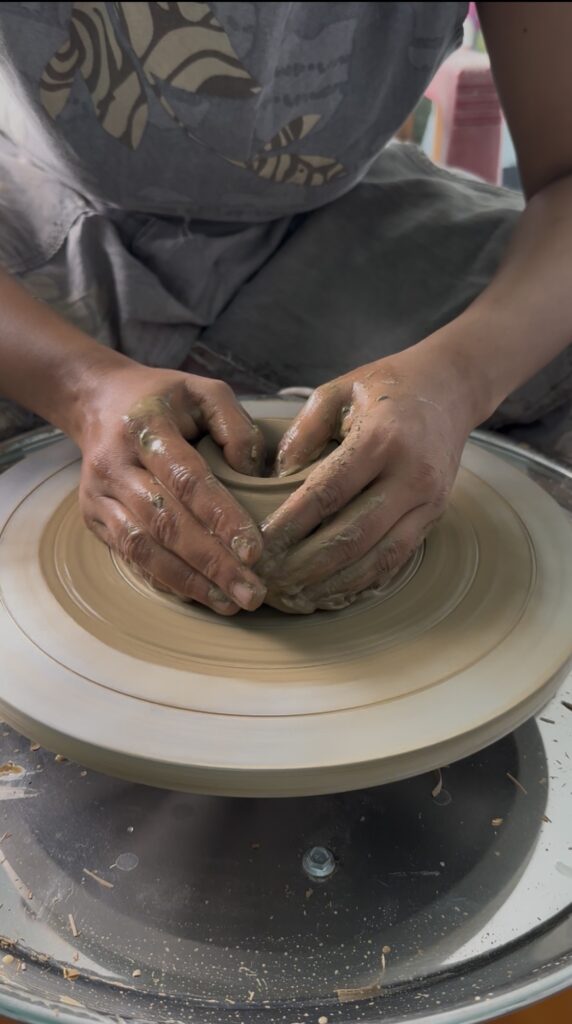
After concluding her mountain chapter, Tanushree travelled to Goa, drawn initially by the promise of coastal life. It was during a visit to Andretta near Palampur, however, that pottery first revealed itself as more than an artistic pursuit. Observing potters at work, she encountered clay as a way of living rather than an object to master. The quiet rhythm of the wheel and the focused repetition of hand movements resonated deeply, marking a turning point that stayed with her long after.
Learning the Discipline of Tradition
To develop her practice seriously, Tanushree pursued formal training at the Central Village of Pottery Institute (CVPI), Khanapur. Over a four-month wheel-throwing course followed by a master training programme, she learned traditional techniques within a structured environment. CVPI instilled in her not just technical skill, but respect for material, consistency in practice, and the understanding that pottery is a lifelong discipline rather than a destination.
Establishing a Practice in Goa
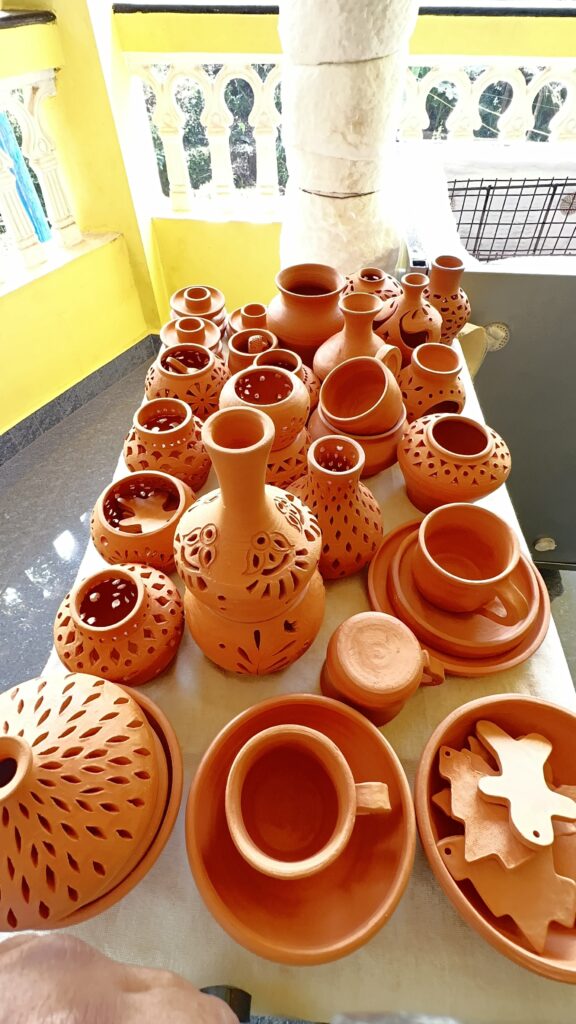
Support from a government scheme, which provided her with a potter’s wheel, enabled Tanushree to establish her own workspace in Dongrim, Mandur. This milestone gave her the confidence to commit fully to daily studio practice. Today, she runs Tilottama Pottery Studio in Goa, where she creates sustainable terracotta ware, teaches beginners and enthusiasts, and contributes to the preservation of Indian pottery traditions through both making and mentoring.
An Aesthetic of Simplicity and Use
Tanushree’s work is defined by restraint and functionality. Her forms are clean, tactile, and shaped by everyday utility, allowing the clay’s natural character to remain visible. Alongside functional ware, she creates terracotta jewellery designed for daily wear, rooted firmly in traditional craft methods. Subtle textures and honest surfaces reflect a philosophy that values process over ornamentation.
The Philosophy of Slow and Mindful Making
Central to Tanushree’s practice is a commitment to slow-made work. Each piece is given the time it requires, without rushing form or finish. For her, mindfulness in making is about presence, remaining attentive as the material responds, and allowing the final form to emerge organically rather than through force or haste.
Jaali Work and the Beauty of Precision
Among her preferred techniques, jaali work holds special significance. Combining structure with delicacy, the process demands unwavering focus. Once a cut is made, it cannot be reversed, making every decision intentional. The resulting interplay of light and shadow when a candle or lamp is placed inside a finished piece adds a quiet, contemplative dimension that reflects both patience and precision.
Jewellery Shaped by Travel and Nature
Tanushree’s terracotta jewellery evolves through an intuitive process. Inspired by natural forms and memories from her travels, each piece begins with a simple idea that unfolds during making. Hand-carved and carefully finished, the designs retain an organic quality, reflecting both movement and stillness drawn from landscapes she has traversed.
A Day in the Studio
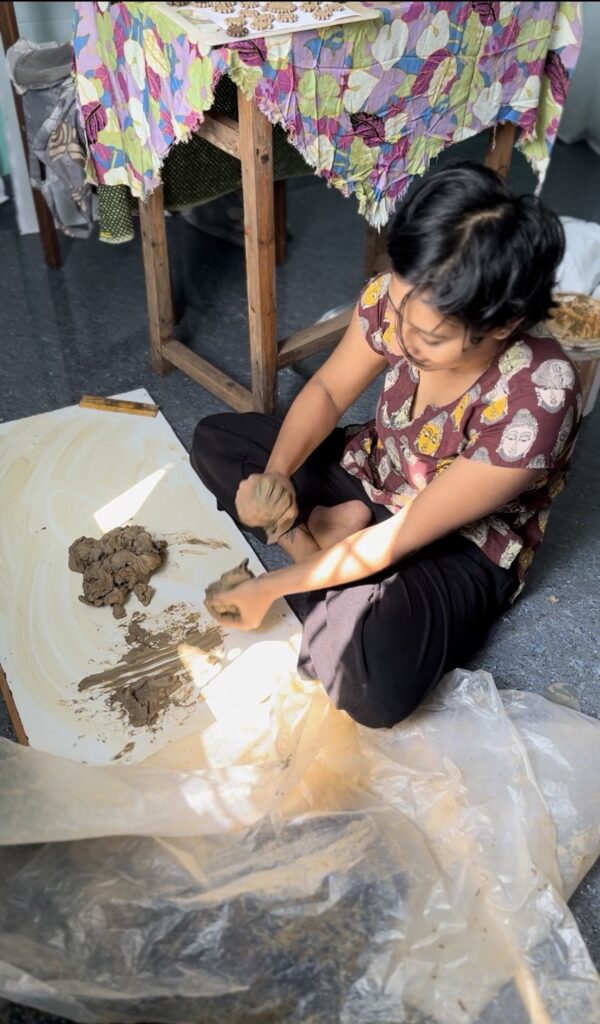
Life at Tilottama Pottery Studio follows a rhythm as measured as the wheel itself. Days may begin with clay preparation and planning, followed by throwing, handbuilding, or jewellery work. Some sessions are devoted entirely to trimming, finishing, or jaali carving; others focus on cleaning tools, arranging fired pieces, or preparing for upcoming markets and exhibitions. Each day concludes with restoring the workspace and setting intentions for the next.
A Changed Way of Seeing
Pottery has reshaped how Tanushree views herself and the world. The practice has cultivated patience, attentiveness, and respect for natural processes. Working with clay has also deepened her awareness of fragility, how, like a vessel, life requires care, balance, and humility to endure.
Looking Toward the Future
As her journey continues, Tanushree hopes to expand her reach through exhibitions, workshops, and community-based initiatives that pass on traditional pottery knowledge. She envisions integrating travel with practice, learning from local potters across regions while sharing her own techniques. In the long term, she dreams of establishing a pottery museum, an evolving archive dedicated to traditional practices, collective learning, and sustained appreciation of the craft.