
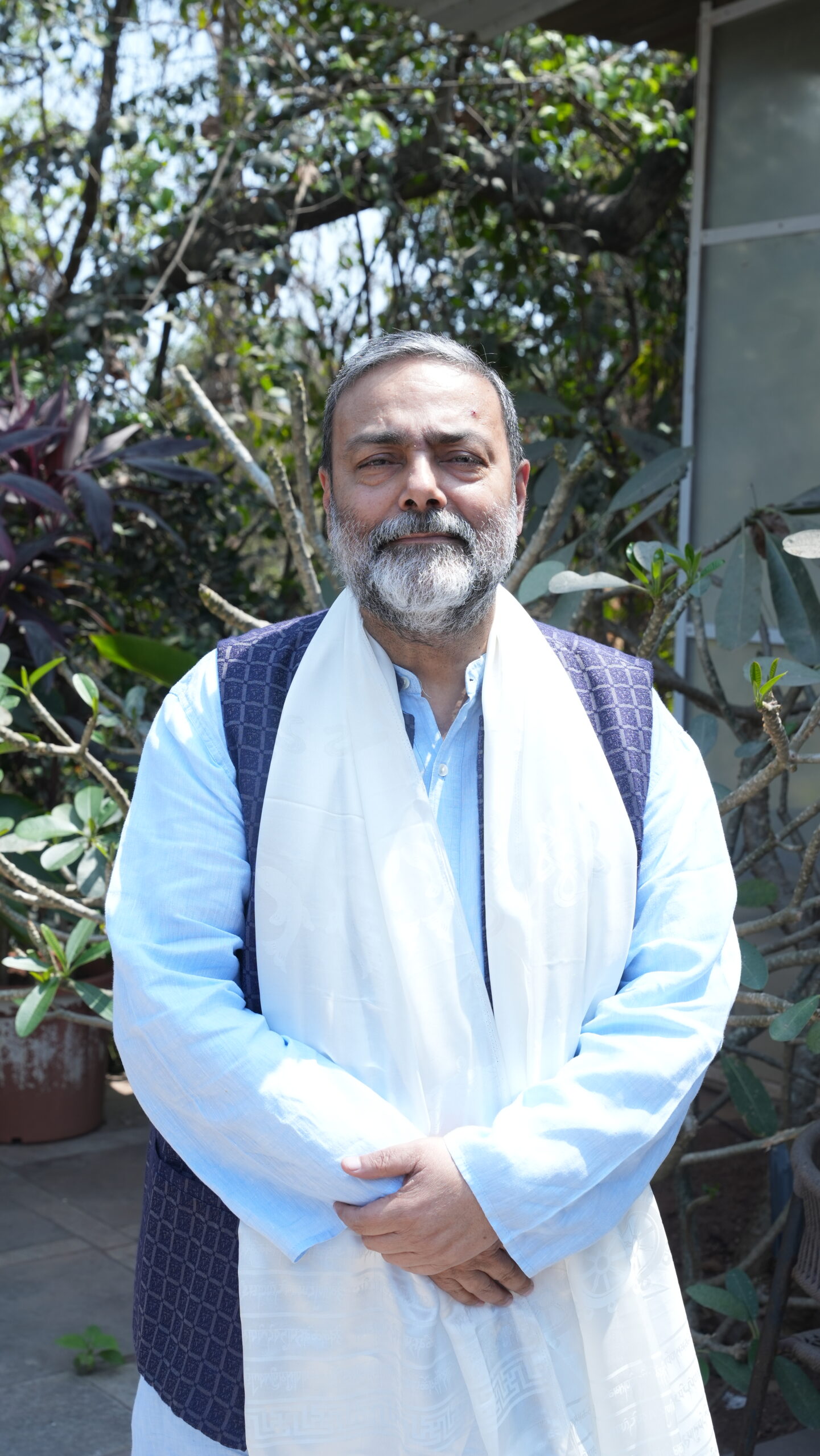
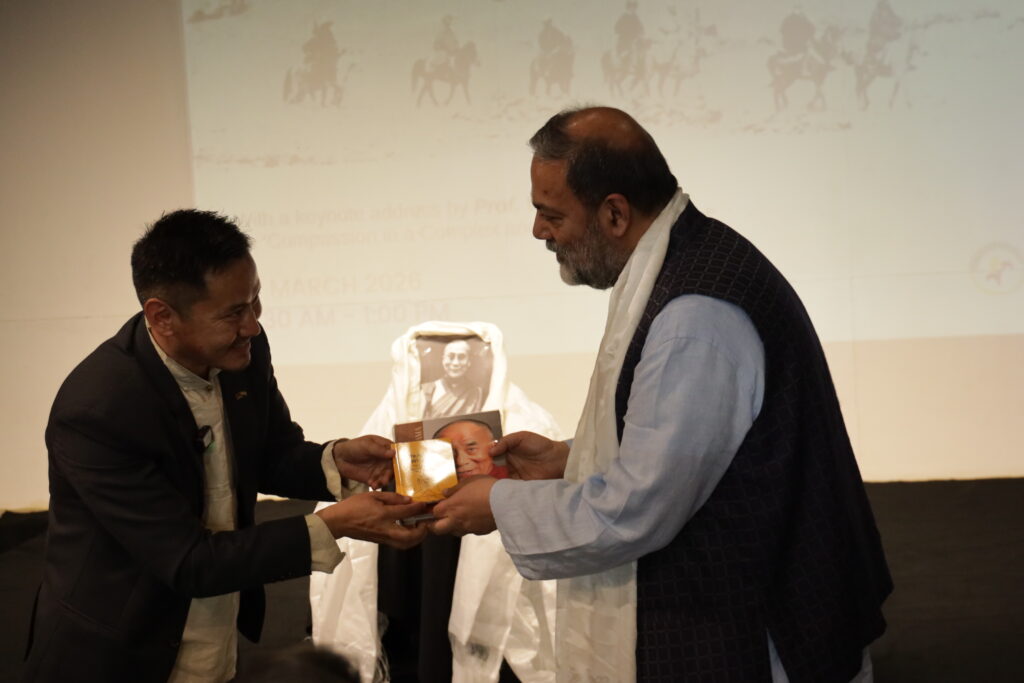
Panaji, March 2026: Compassion must become central to decision-making in international politics if conflict is to be reduced in an increasingly unstable world, Prof. Varun Sahni said while inaugurating an exhibition, Refuge, Rights & Resilience: The Tibetan Story, co-curated and presented by the Tibet Museum and the Museum of Goa, as a part of The Infinite Ripple – 90 Years of Compassion.
Delivering the keynote address on ‘Compassion in a Complex and Often Cruel World,’ Sahni, Professor of International Relations at Ashoka University, located in the National Capital Region, reflected on global power shifts, rising extremism and environmental breakdown. He argued that alongside systemic change and geopolitical competition, a deficit of compassion continues to shape contemporary crises.
Recalling a past meeting with the 14th Dalai Lama, Sahni, a former Goa University vice chancellor, said he was told that until compassion becomes the source of decision-making, conflict in international politics will remain inevitable. “Over the years, I have come to better appreciate the depth of that remark,” he said, in his MOG Sunday talk, which opened the exhibition, a collaborative effort between the Museum of Goa and the Tibet Museum.
Breaking down global complexity, Sahni outlined three types of contemporary problems: new global challenges such as climate change and pandemics; old problems requiring new solutions, including trade and resource scarcity; and long-standing security issues complicated by new actors. He described the current moment as one of both power transition and system transformation, marked by technological change, cultural extremism and fragile political systems.
Turning to the idea of cruelty, Sahni suggested it may arise from learned behaviour, insecurity, instrumental control or even sadistic impulses. However, he maintained that most forms of cruelty can be confronted by enlarging the sphere of empathy. “Compassion goes beyond empathy,” he said. “It is empathy in an active voice — a desire to help and take action.”
The exhibition examines the Tibetan experience of exile since 1959 and the preservation of cultural identity without territorial sovereignty. Earlier, Tenzin Topdhen, Director of the Tibet Museum, described the exhibition as “not simply about history, but about human endurance.”
Speaking as a Tibetan refugee, Topdhen drew parallels between Goa and Tibet, noting that both regions have negotiated layered histories of colonisation, migration and identity. “Culture is not preserved in museums alone. It lives in kitchens, in festivals, in children’s laughter,” he said, adding that resilience in exile has meant rebuilding schools, monasteries and institutions while maintaining language and memory.
Topdhen emphasised that the Tibetan struggle has centred on nonviolence and dignity, guided by the principle that “losing our homeland should not mean losing our humanity.” The exhibition presents archival material, photographs and personal histories that foreground rights, memory and cultural continuity.
Quoting from a recent publication by the Dalai Lama, Sahni concluded that as the world becomes more interconnected, societies must rise above narrow self-interest for the sake of shared humanity and a fragile planet. “The survival of Tibet and the Tibetan people,” he read, “is in the larger interest of humanity itself.”
The exhibition will remain open to the public at the Museum of Goa until March 8 and will conclude with another MOG Sunday talk by Karma Thupten, Director of the Sager Science Foundation, a Tibetan educational initiative for inculcating interest in science among Tibetan monks and nuns.