
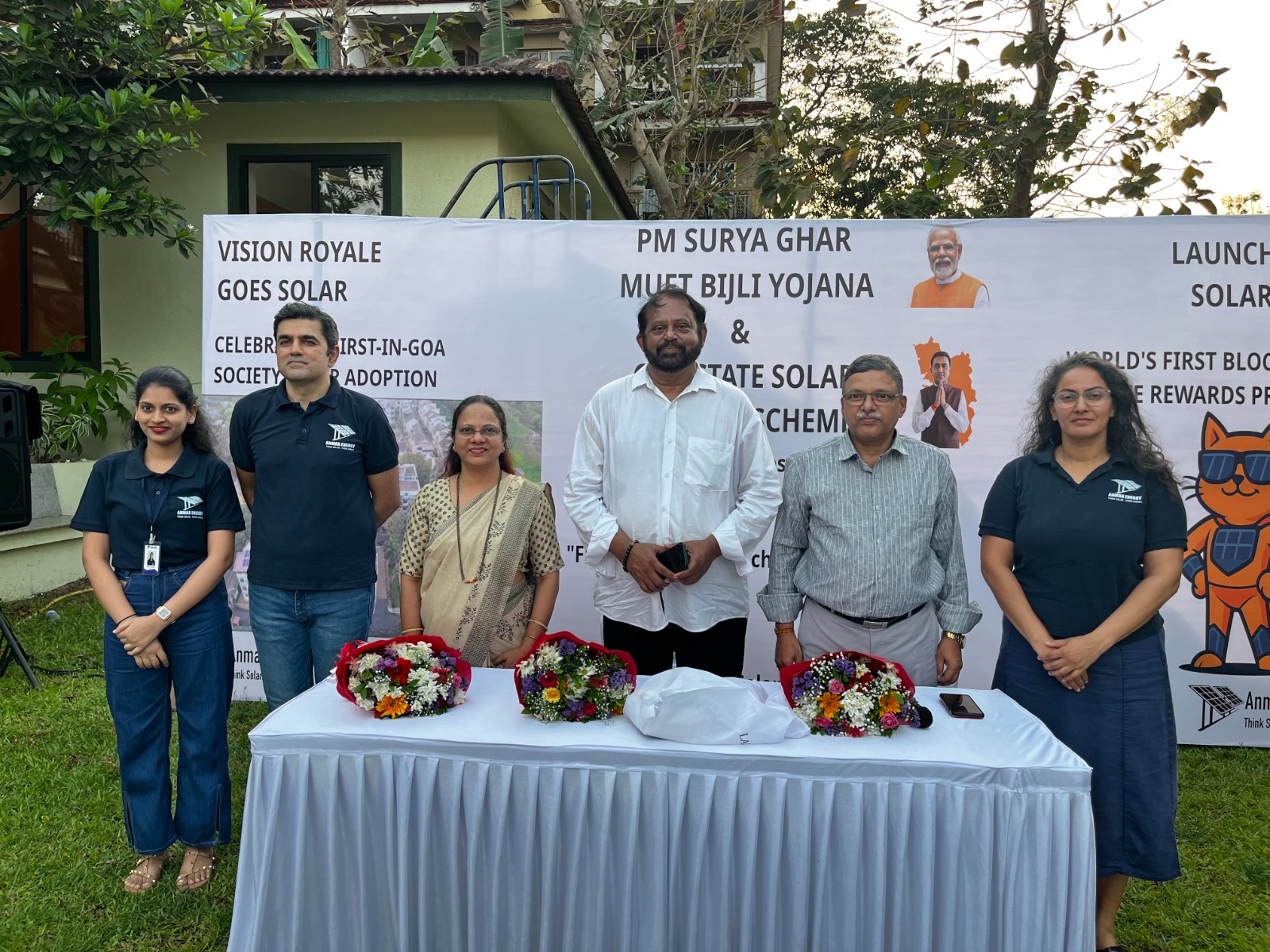
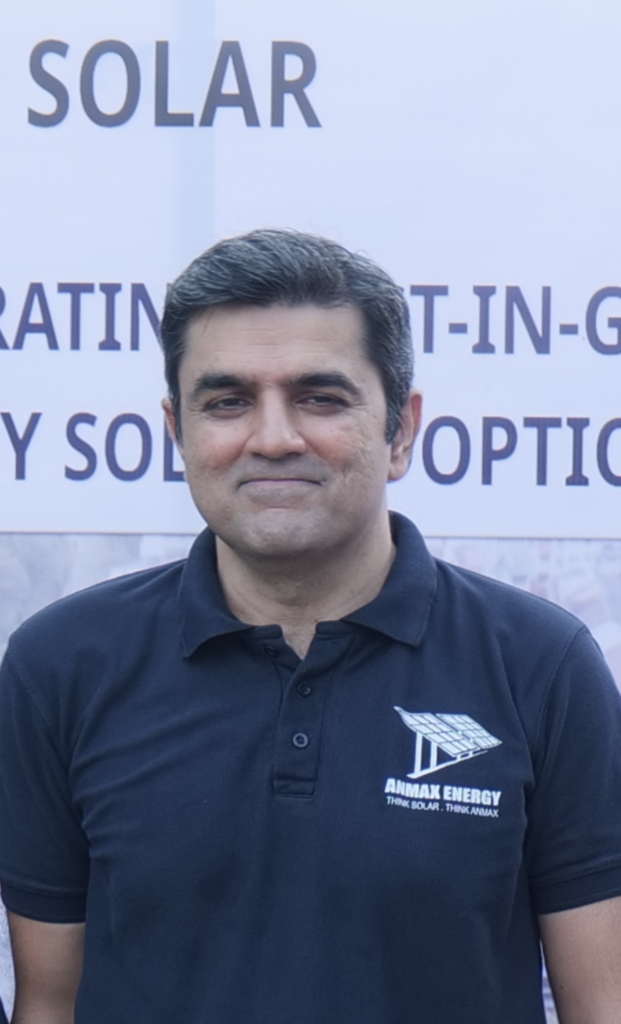
As solar adoption gains momentum in Goa, private sector-led initiatives are playing a pivotal role in facilitating adoption. The transition of the Merces-based Vision Royale into the state’s first fully solar-powered housing society marks a significant milestone in this journey, an initiative led and implemented by Goa-based Anmax Energy. The project, executed under the PM Surya Ghar: Muft Bijli Yojana and the Goa State Solar Subsidy Scheme, was inaugurated in the presence of St. Cruz MLA Rodolfo Fernandes, Anupa Khorjuvekar of the Goa Energy Development Agency (GEDA, and Prashant Mantri, Secretary of Vision Royale, along with residents and stakeholders. Speaking on the sidelines of the event, Anant Kochhar is the Founding Director of Anmax Energy Private Limited, a solar energy and circular blockchain economy startup based in Goa, outlined the process, financial viability, and long-term value of solar adoption for homeowners, highlighting why the transition is becoming increasingly accessible.
What does this milestone represent?
This is not just a single project, it signals the beginning of a larger movement. Our focus is on building a network of environmentally conscious individuals and households. Solar energy is the starting point; the real question is what comes next and how we can help people do more in terms of sustainable energy.
How can residents adopt solar within housing societies?
Residents need to coordinate with their housing society to secure rooftop space for installing solar panels. They can formally request allocation, and as per the rules, the society must either approve the request or provide an alternative space within a defined timeframe, typically within seven days. This ensures that any interested resident has a clear pathway to adopt solar. With strong government encouragement and supportive policies in place, there are minimal barriers to adoption. In many cases, rooftops remain unused, and solar offers a practical way to make productive use of that otherwise wasted space.
What financing or subsidy options are available for residents who want to adopt solar solutions?
Under the PM Surya Ghar scheme, residents can avail financing of up to 90 percent, with loans offered at relatively low interest rates compared to standard lending. This makes solar energy significantly more affordable. In practical terms, homeowners can convert their monthly electricity bill into an EMI, so instead of paying a recurring expense, they are effectively paying for their own solar system.
The loan tenure is typically around five years, while the solar plant itself has a lifespan of 25–30 years, making it a strong long-term investment. At Anmax Energy, the entire process is handled end-to-end, from assessing the customer’s financial situation and suggesting the most suitable payment option, to installation and ongoing support, ensuring a seamless experience for the homeowner.
How long does it typically take for a homeowner or society to recover their solar investment?
The recovery period typically ranges from two to five years, depending on the size of the system. Larger systems tend to generate more energy and, therefore, offer better returns. For instance, a 10 kW system is often considered ideal, as it usually delivers faster recovery, around two to three years, while continuing to generate savings over a much longer lifespan.
How much money can an average Goan household save by opting for solar power?
If you install a 10 kW solar system, you can generate savings of around ₹7,000 per month, which provides a significant boost in reducing overall energy costs. Beyond this, the real advantage lies in how the energy is used. It can help support everyday household needs like cooking and other energy consumption.
This gives homeowners greater control over their energy usage, allowing them to manage and reduce costs across multiple areas. In addition, Anmax is introducing a blockchain-based initiative where users can earn rewards based on the energy they generate. This is aimed at creating additional value, where solar energy can be converted into tangible benefits, including being used for everyday purchases like food.
Finally, with the increasing popularity of EV cars, do you have any plans in that sector?
Yes, this is an area we are keen to explore. One of the solutions we are looking at is retrofitting, where we convert an existing car into an EV. This allows owners to transition to cleaner mobility without having to purchase a brand-new EV. The conversion cost is typically in the range of ₹4–5 lakh, making it a more affordable option compared to buying a new electric car. We see this as a practical and scalable way to encourage EV adoption, especially for those who want to make the shift without a high upfront investment.