
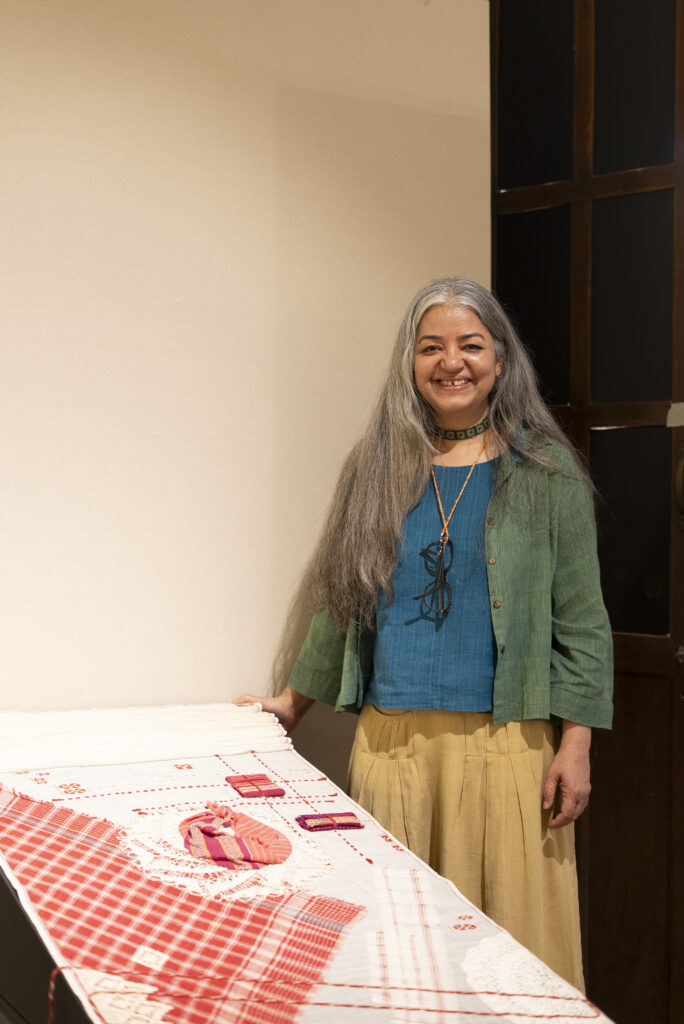
In a world increasingly shaped by fast fashion and industrial production, Kalakar stands as a quiet yet powerful testament to the enduring value of handmade textiles. Founded in 2011 by textile designer and artist Poonam Pandit, Kalakar is not merely a design initiative, it is an ongoing commitment to preserving and evolving the weaving practice of Goa’s last practising traditional handloom weaving family.
With over three decades of experience across design, research, and collaboration with artisan communities, Pandit’s journey into textiles is deeply rooted in both personal memory and professional exploration. Her early exposure to diverse Indian textiles, brought home by her father during his postings across the country, sparked a lifelong fascination with craft. This curiosity matured during her time at the National Institute of Fashion Technology (NIFT), where a field study in Barmer offered a transformative insight into the relationship between artisans, their craft, and the environments they inhabit.
Before establishing Kalakar, Pandit’s career spanned export houses, international markets, and collaborations with designers and NGOs. These experiences provided her with a layered understanding of both global design sensibilities and the realities of craft communities. However, it was her work in Goa with renowned designer Wendell Rodricks that became the turning point.
Asked to research the traditional Kunbi sari, Pandit embarked on an extensive search across Goa, encountering abandoned looms and stories of a declining craft. This journey eventually led her to the Tilve family in Paliem, the last practising traditional handloom weavers of Goa. The discovery was pivotal. What began as a design project soon evolved into a deeply personal and professional commitment to sustaining their craft.
The collaboration resulted in a remarkable revival effort. Through meticulous research, restoration of looms, and the development of new designs rooted in traditional weaving techniques, Pandit worked closely with the Tilve family to create a collection that was showcased at Wills India Lifestyle Fashion Week in 2010. The collection received widespread acclaim, marking the return of handwoven saris from Goa after decades of absence.
Kalakar was born as a continuation of this effort, a space where traditional weaving, contemporary design, and collaborative craftsmanship could coexist. At its core lies a philosophy of working with artisans on their terms, respecting the rhythms of their lives rather than imposing industrial timelines. This approach means that production remains slow and adaptive, shaped by the realities of a living craft tradition rather than the demands of mass production.
The significance of Kalakar’s work extends beyond design. Goa’s handloom traditions, including the kappod, lenço, valo, and pancha, are deeply intertwined with the region’s history, climate, and cultural identity. These textiles, once integral to everyday life, have gradually faded due to economic and social shifts. Kalakar’s efforts highlight not only their aesthetic value but also their functional brilliance, fabrics designed to suit the humid coastal climate, made from natural fibres, and produced with minimal environmental impact.
Central to Kalakar’s practice is its collaboration with the Tilve family, now carried forward by Kaka’s son Dilip. While challenges such as limited space, aging artisans, and shifting aspirations persist, the commitment to continuity remains strong. The process is built on dialogue, trust, and adaptability, ensuring that the craft evolves organically without losing its essence.
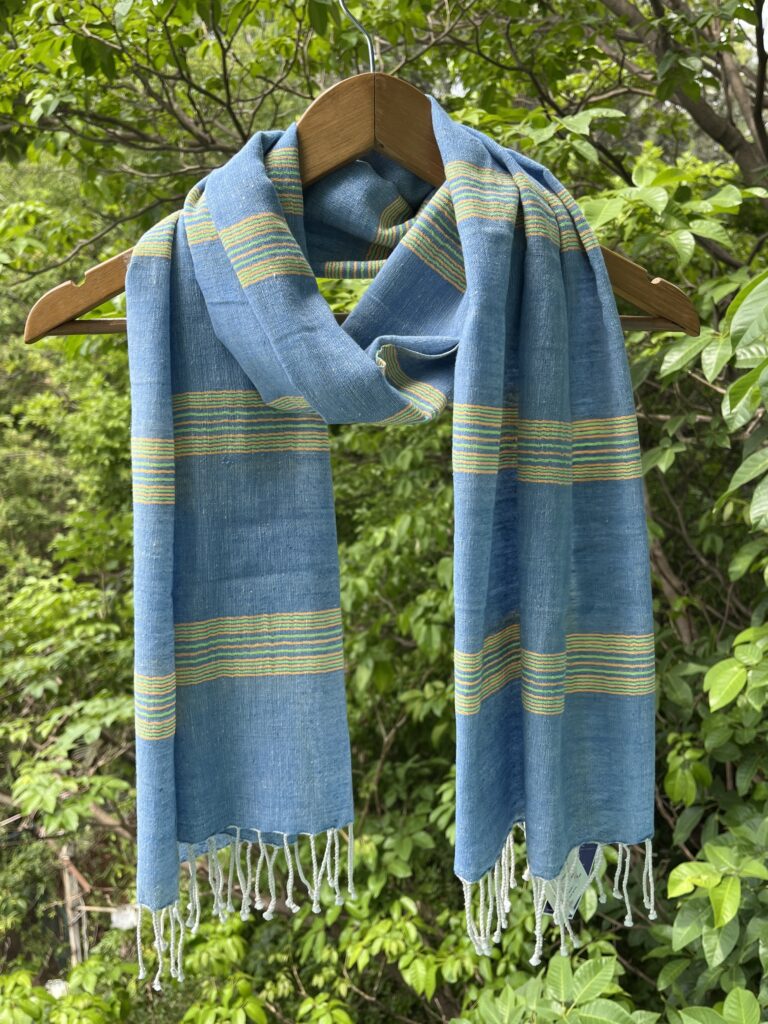
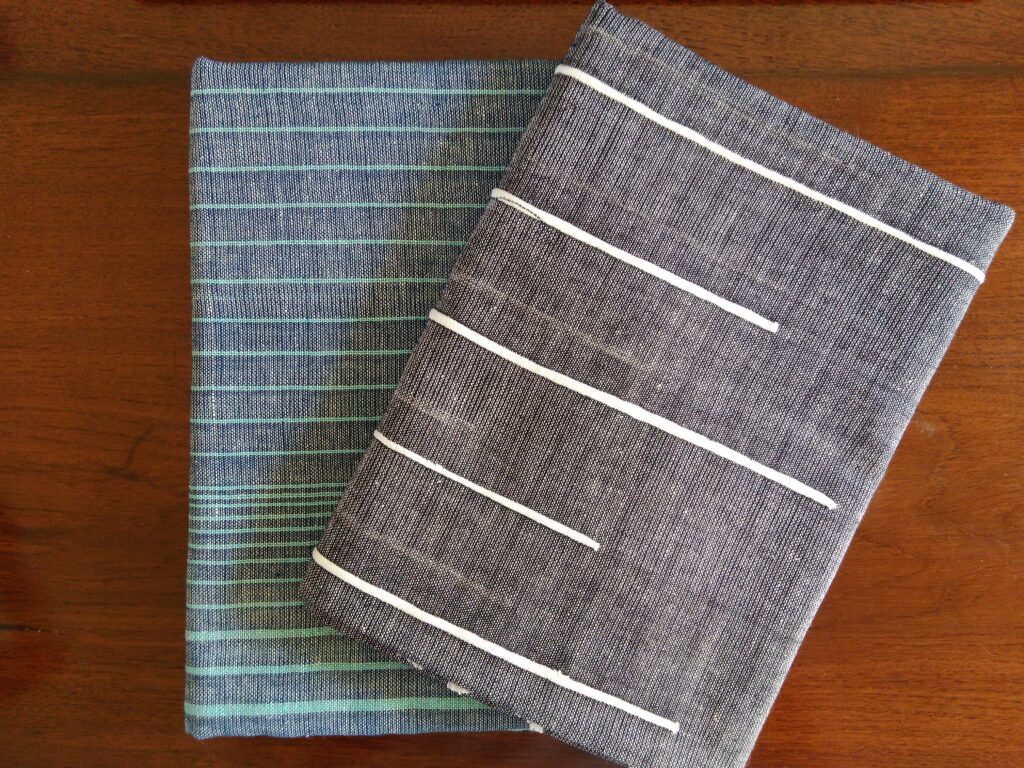
Kalakar’s creations reflect a thoughtful balance between preservation and innovation. While the foundational elements, traditional yarns, weaving techniques, and handloom processes, remain unchanged, the designs explore new possibilities through natural dyes, experimental materials, and contemporary aesthetics. The result is a diverse collection ranging from minimalist patterns to richly textured textiles, each piece carrying a distinct identity while remaining rooted in tradition.
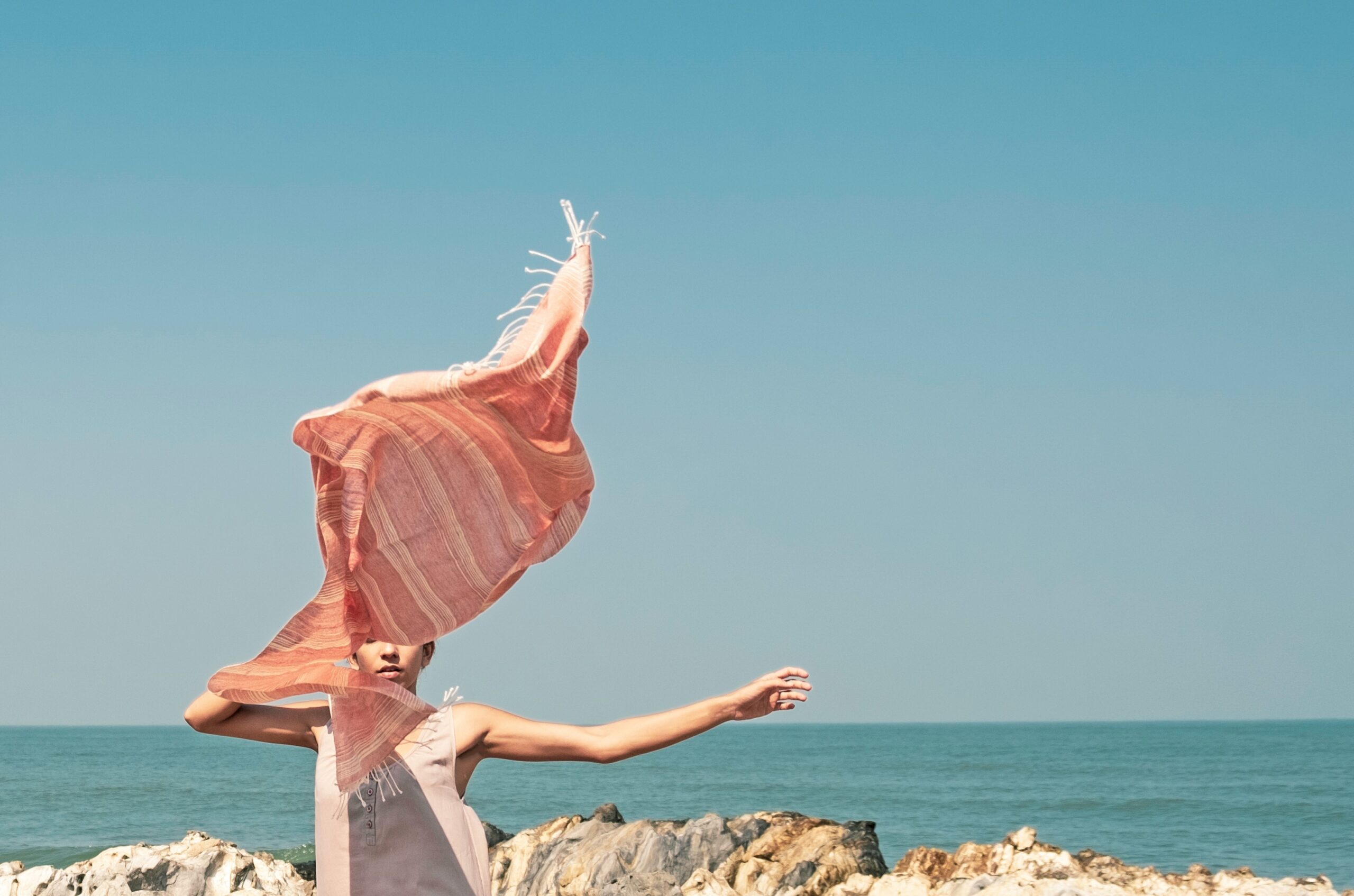
The product range includes scarves, wraps, fabrics, clothing, and textile art, all produced in limited quantities. Each piece is crafted slowly, ensuring that no two items are identical. This approach not only emphasizes quality and individuality but also reinforces a deeper connection between the maker, the material, and the final product.
Kalakar’s presence extends through carefully chosen spaces such as the Museum of Goa and Gallery OED in Kochi, along with direct interactions through pop-ups and personal networks. This selective approach ensures that the narrative behind each piece is communicated and appreciated, rather than lost in conventional retail environments.
Among the many milestones in its journey, the continued practice of weaving itself remains the most significant achievement. Recognition of the Tilve family, including state honours for their contribution to traditional craft, has brought visibility to a heritage that had been largely overlooked. For Pandit, however, the true reward lies in the quiet continuity of the loom, the fact that the craft endures.
Looking ahead, Kalakar’s vision remains grounded and focused. The aim is to sustain the practice, nurture its evolution, and remain open to those who understand its value, whether as artisans, collaborators, or patrons. In a broader context, the gradual revival of Goan weaving through cooperatives and training initiatives offers hope, provided these efforts remain authentic and inclusive of the communities to whom the attire belongs.
Kalakar is not driven by scale or speed. It is defined by patience, respect, and an enduring belief in the handmade. In every thread, it carries the memory of a place, the skill of a maker, and the possibility of continuity, ensuring that a vital part of Goa’s cultural fabric continues to be woven into the present.