

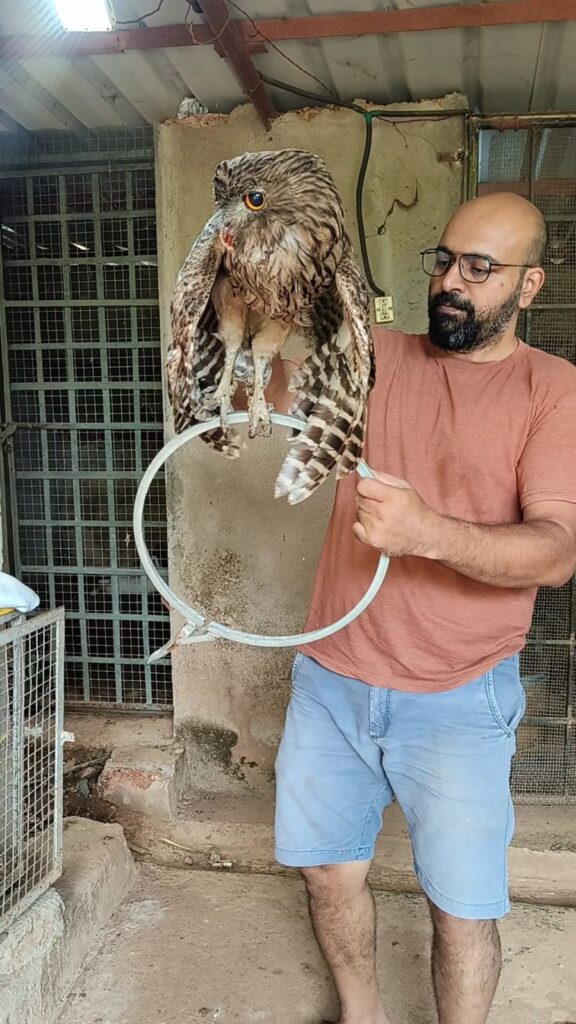
Goa’s forests and waterfalls are often seen as escapes into nature. But beyond the beauty lies a quieter reality—one shaped by what people leave behind. As a wildlife rescuer, I have seen how litter in these remote spaces is affecting animals in ways most people never witness.
By Sricharan Dessai
I have spent years rescuing animals across Goa. Most people know me for responding to calls in homes, buildings, or city spaces. But some of the most difficult and disturbing situations I encounter are not in the cities. They are deep inside forests, along trekking routes and near waterfalls, places where help rarely reaches in time. When I go into the wild, I am not just looking for animals in distress. I am also seeing something else that does not belong there garbage.
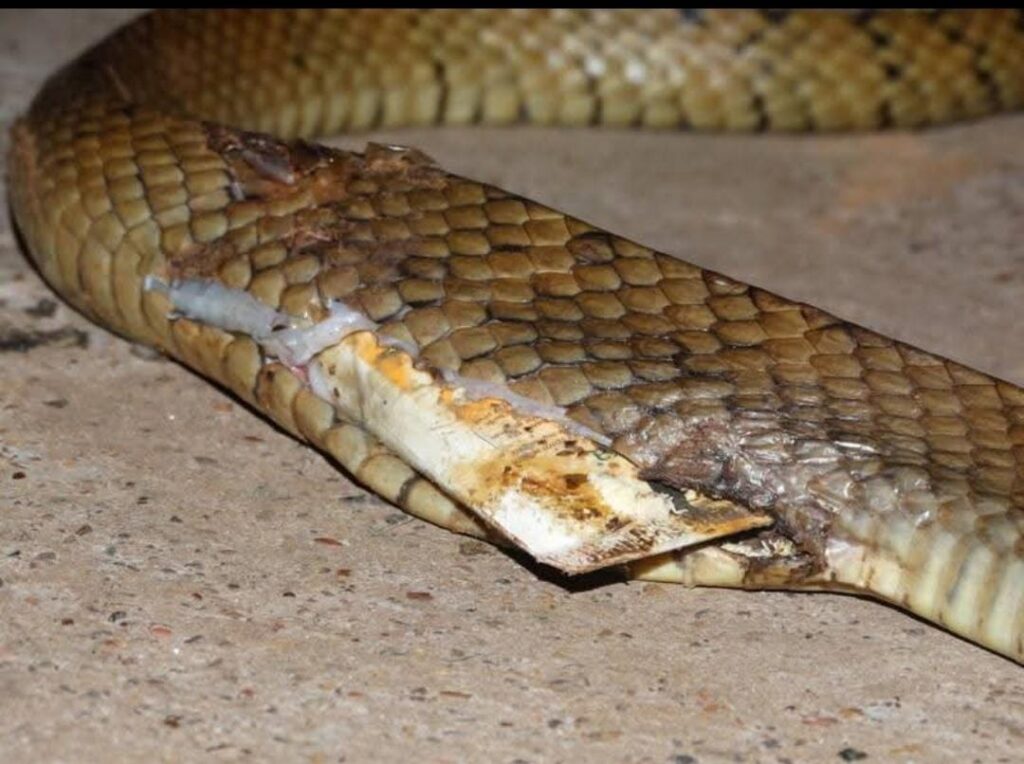
Many of these places are beautiful. People go there to enjoy nature, to relax, to spend time away from the city. But what is left behind tells a different story. I come across plastic jars, beer cans, food packets, and bottles lying scattered along trails and near water bodies. Over time, this waste does not just stay as litter. It starts affecting the animals that live there. I have seen snakes with their mouths stuck in beer cans. I have seen a snake that had swallowed an empty tube and died. I have come across dogs with their heads stuck inside plastic containers. There was even a monitor lizard trapped inside a can. These are not rare incidents. I see such cases again and again.
Many people ask me how animals get into these situations. The answer is simple but also worrying. When people leave behind food waste, it attracts rats. Rats move around the garbage and leave their scent. Snakes follow this smell because that is how they hunt. They think they are following prey, but instead they reach garbage. Sometimes they try to eat it. Sometimes they get stuck in it. And if no one finds them in time, they die slowly. This is something most people do not see. It happens quietly, in places where there is no one to report it.
In cities, if someone calls, we can respond quickly. But in forests and near waterfalls, it is very different. Many of these places have no network, and even reaching them is difficult. You cannot take a vehicle all the way. You have to walk, sometimes long distances. Because of this, even if someone spots an animal in trouble, it is very hard to get help on time. In my experience, only a small number of such cases can actually be attended to. The rest remain unseen, and that is the hardest part, to know that there are animals suffering that we cannot reach.
I believe enjoying nature is important. Trekking, visiting waterfalls, exploring forests, these are all good things. But they come with responsibility. What I see today is that people carry plastic, food, and drinks into these places and leave them behind. This is directly and indirectly affecting wildlife. If eco-tourism is to work, there have to be stricter rules and more awareness. Otherwise, we are slowly damaging the same places we go to enjoy.
There are many rescues I remember, but the ones from the wild stay with me the most. Animals stuck in garbage with no one around, injuries that could have been avoided, and deaths that happen because help cannot reach in time. Sometimes, when I reach a location after a long trek, I already know it might be too late. Over the years, I have understood that rescue alone is not enough. Prevention is more important.
For me, the solution is very simple. Do not leave garbage behind. Whatever you carry into the forest, bring it back. Do not leave food waste. Do not throw bottles or cans. These small actions can prevent a lot of suffering. And if you see an animal in distress, report it. That is the most important role anyone can play. Without a person reporting, a rescue cannot happen.
When I speak to people, I tell them one thing clearly. Helping wildlife is not just about animals. It is about us. If there is a dead or injured animal, it can spread disease. If forests are polluted, it affects water and the entire ecosystem. Everything is connected. So when you act responsibly, you are not just helping animals. You are also protecting yourself and your environment.
Every time I go into these areas, I come back with two things, the memory of the animals I tried to help and the reminder of how much damage a small act of carelessness can cause. The forests of Goa are still beautiful, but they are also vulnerable. All I ask is this: enjoy them, but respect them.
(The author Sricharan Dessai is a Wildlife Rescue and Research professional, a Certified Animal Communicator, Member of Goa State Wildlife Board and founder of SAWE – Study and Awareness of Wildlife and Environment)